Forecast
Article
February 2022
Operators revised their proved reserves downward in 2020 and postponed development drilling.
Article
February 2022
Every region will post an increase, led by the Middle East, the Americas, Africa and the FSU. Offshore activity will grow at about the same pace as onshore drilling.
Article
February 2022
Despite higher oil prices, U.S. shale operators have (until recently) resisted ramping-up drilling activity and remained disciplined with capital expenditures.
Article
February 2022
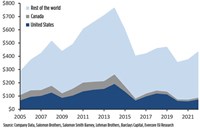
Worldwide E&P spending is set to increase 16% in 2022, extending the 5.5% growth experienced in 2021. The first coordinated global upturn since 2018 will be led by North America, but ambitious capacity growth targets in the Middle East, Latin America and Africa will drive international capex gains.

Article
February 2022
The upstream industry must play a defensive holding action until the U.S. mid-term elections.
Article
February 2022
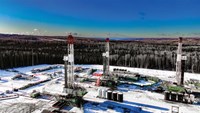
As the global economy recovers from the pandemic, indicators have shifted to a positive outlook for the first time in many years. But politics, especially in Canada, have cast a pall over any potential turnaround for the Canadian industry.
Article
February 2022
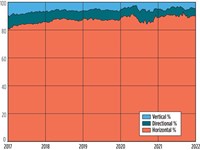
The average U.S. rig count for 2021 increased almost 9% from the previous year, though companies remained cautious with ramping up drilling activity.
Article
February 2022
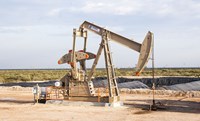
U.S. oil production decreased mildly during 2021. A surge in gas prices during 2021 was influenced by increased demand despite Omicron and geopolitical unrest in Europe.
News
April 26, 2021
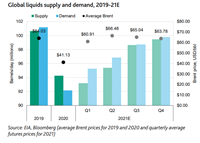
A sustained uptick in commodity prices on the back of a recovering global economy is set to bolster a turnaround in industry fundamentals over the coming 12 to 18 months.

News
March 17, 2021
Global oil demand won’t return to pre-pandemic levels until 2023, and growth will be subdued thereafter amid new working habits and a shift away from fossil fuels, the International Energy Agency said.
Article
February 2021
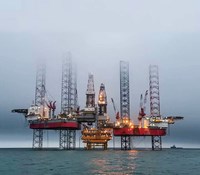
Following a tumultuous 2020, global drilling rates outside the U.S. are a bit of a mixed bag for 2021. Lingering economic effects from shutdowns and travel restrictions are impeding recovery in regions like Africa and Eastern Europe, while Western Europe and South America are finding their stride.
Article
February 2021
U.S. proved reserves effectively unchanged
Article
February 2021
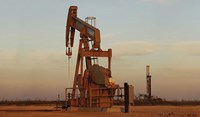
Despite an historically low, 54% decline in drilling activity, U.S. oil production was down just 7.6% on a year-over-year basis, averaging 11.318 MMbopd in 2020. The loss in U.S. output could have been more drastic, but OPEC+ did a masterful job of curtailing production during the year to support benchmark prices.
Article
February 2021
U.S. rig counts crash to historic lows
Article
February 2021
A meaningful recovery in U.S. drilling activity during 2021 will be hampered further by President Biden’s Executive Order that indefinitely blocks new leases and drilling permits on federal lands and waters for up to a year.
Article
February 2021
Worldwide E&P expenditures should increase 6.8% in 2021, recovering partially from a 25.3% collapse in 2020. The first coordinated global upturn since 2018 will be led by a stronger rebound in select International regions.
Article
February 2021
The oil and gas business had an exceedingly difficult time in 2020. There are signs that activity may be improving, but it’s hard to compare against a year that felt like rock bottom, and to forecast in the shadow of a pandemic.

Article
February 2021
On his first day as President, Biden recommitted the U.S. to the Paris Climate Agreement, rescinded the construction permit for the Keystone XL oil pipeline, and ordered federal agencies to begin reinstating over 100 environmental regulations rolled back by Trump—including ones governing methane leaks from O&G wells and greenhouse gas (GHG) emissions from vehicle tailpipes.
News
February 09, 2021
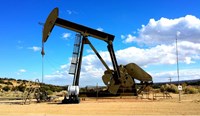
Supply from new oil wells will exceed declining flows from wells already in service, raising overall crude production from the second half of this year, the U.S. Energy Information Administration said in its Short-Term Energy Outlook.

News
January 14, 2021
Over the long-term, the impacts of behavioral shifts due to COVID-19 are minor compared to “known” long-term shifts such as decreasing car ownership, growing fuel efficiencies and a trend towards electric vehicles, whose impact is estimated to be three-to-nine times higher than the pandemic’s by 2050.
Article
December 2020
It is an understatement, to say that 2020 is the year that people want to forget—most people were “done’ with this year by about August. Nevertheless, it’s hard to ignore a year that was filled with so much impact, and which was deadly (Covid-19), tumultuous (oil market and prices) and unpredictable (politics, elections and regulation), often all at the same time. There were unprecedented social and business lockdowns in response to Covid-19 that killed demand. There were record-low oil prices and record-low rig counts that slashed activity. And there were record-high vote totals in the U.S., amid an election that just finally resolved itself on Dec. 14.
Against this background, a core group of our editorial advisors has worked to assess the global E&P industry during the last 12 months, and attempted to foresee what may take place in the coming year. Some of the subjects tackled by our advisors include a look at how to boost the global LNG market; continued uncertainty for the UK Continental Shelf; the carbon intensity of reserves, as the next step to net-zero; the role that Norwegian firms are playing in developing technology that will help the industry to prosper; a look at some talented leaders that are impacting the industry in its time of need; the true impact of digital oilfield technology; and a look at an Arctic oil field of the future, which is developing now. We encourage you to read forward for all the details.