Why a common safety standard still matters in a global energy workforce
LUCIE BOOTH, OPITO

Across the energy sector, work is becoming more mobile, projects more complex and operating environments more demanding. As technologies and energy systems evolve, many of the fundamental risks that workers face remain unchanged. Today, having a shared understanding of safety across the sector matters as much as ever, Fig. 1.
The International Minimum Industry Safety Training (IMIST) standard from OPITO, the global, not-for-profit skills authority for safety-critical industries, provides that shared foundation. By giving the global energy workforce a consistent baseline of safety awareness, it supports safer decision-making, strengthens personal accountability and builds trust across employers, assets and regions.
A SAFETY FOUNDATION THAT TRAVELS WITH THE WORKFORCE
“The core purpose of IMIST is to build a universal foundation of safety awareness and behavior,” explains Lucie Booth, Product Development manager at OPITO. “The standard gives every worker—regardless of location or employer—a baseline understanding of hazards, controls and safe systems of work.”

That consistency is critical in an industry where personnel regularly move between employers, assets and even countries. “A minimum standard ensures that every worker is aligned on how hazards arise, how they can escalate and how they’re controlled,” Booth says. “It’s independent of any local practices or company-specific procedures.”
So, regardless of where a worker’s career takes him or her, the standard provides a shared understanding of best practice for managing safety across the industry, Fig. 2.
ADDRESSING RECURRING SAFETY CHALLENGES
OPITO’s IMIST standard addresses risks that are familiar across the sector. These include both major accident hazards and the everyday operational risks that contribute to incidents over time.
At the major-hazard level, the standard covers risks, such as:
- Fires and explosions
- High-pressure releases and high-pressure systems
- Structural failure.
Alongside these, IMIST also focuses on common operational hazards across worksites and regions, including:
- Heavy equipment handling
- Chemical exposure
- Slips, trips and falls linked to poor housekeeping.
The standard also covers organizational contributors to incidents, such as weak permit to work controls, inadequate risk assessments and unsafe behaviors that go unchallenged.
“The aim is to ensure workers understand both the technical and behavioral patterns that contribute to incidents,” Booth explains. “That understanding supports safer outcomes in the workplace.”

BEYOND TECHNICAL COMPLIANCE: BEHAVIOR, ACCOUNTABILITY AND SPEAKING UP
OPITO’s IMIST standard is built on the understanding that safe operations depend on workers’ personal responsibility as well as technical compliance.
“Across multiple units, the standard emphasizes that safety isn’t just about knowledge,” Booth explains. “It’s about individual behavior and accountability, which is something that’s so important within the energy industry.”
The standard reinforces practical behaviors, such as selecting appropriate PPE, intervening when unsafe conditions arise, and feeling empowered to speak up, Fig. 3.
“There’s a big focus on intervening and speaking up,” Booth says. “If you see something unsafe, you have a personal responsibility to call it out.”
By embedding these expectations, the standard supports organizations in cultivating a strong safety culture, where workers make safe decisions consistently and proactively.
KEEPING SAFETY FUNDAMENTALS FRESH
Over time, even experienced workers can become unfamiliar with safety scenarios they don’t encounter regularly. OPITO addresses that reality with a four-year IMIST reassessment cycle.
“Reassessment is really important because there are things individuals might not cover every day in the workplace,” Booth says. “Practices change, best practices evolve, and regular reassessment ensures people are keeping that fundamental knowledge up to date.”
For employers, reassessment ensures that safety competence remains current across the workforce. It also gives organizations confidence that their people will continue to apply core safety principles as roles, environments and operational demands change.
IMIST: A FOUNDATION OF EMPLOYER SAFETY PROGRAMS
In practice, employers use IMIST as a baseline safety requirement within their broader training and competence management systems. The standard provides new starters with a foundational understanding of safety and reinforces core principles for experienced personnel.
IMIST can be delivered through OPITO-approved centers or incorporated into employer-led programs. Organizations can integrate units into their existing training through an OPITO-approved center (e.g., on company-specific risk assessment, permit to work systems, etc.) while preserving the integrity of the OPITO standard.
This flexibility allows organizations to tailor safety training to their operational requirements provision without losing any alignment with industry best practice.
CREATING TRUST AND CONSISTENCY ACROSS BORDERS
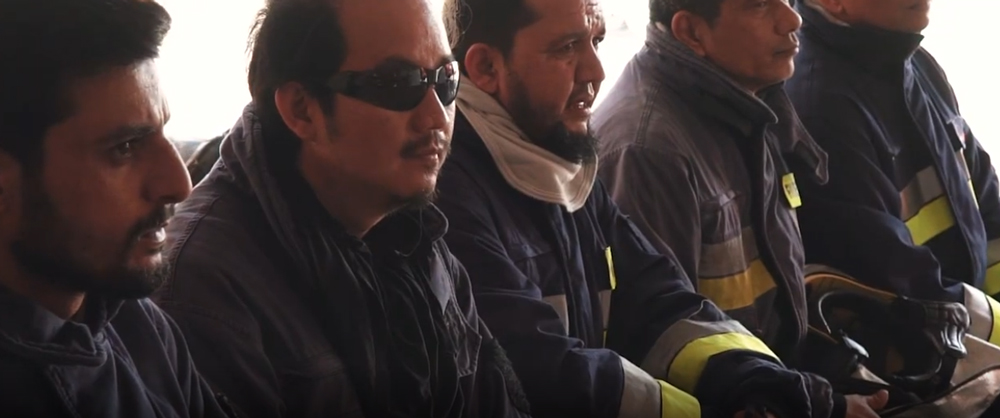
OPITO’s IMIST standard plays a vital role in building trust across the global industry.
“The standard ensures workers across different countries, operators and contractors all have the same minimum level of competency,” Booth explains. “Whether IMIST is delivered in Ghana or in France, it’s exactly the same.”
With assessment, delivery conditions and outcomes all standardized, employers can trust what an OPITO-approved IMIST certificate represents. Workers also benefit from this consistency and recognition, as they move between roles and regions.
IMIST: A SAFETY FOUNDATION FOR A GLOBAL WORKFORCE
For organizations across the sector, IMIST remains a practical reference point for establishing safety fundamentals.
“Ultimately, the standard delivers that baseline of safety training,” Booth concludes. “Everything else can be built from it.”
As the energy sector continues to respond to changing conditions, the need for shared understanding and consistent safety behaviors remains constant, Fig. 4. IMIST provides the common foundation that organizations rely on to support operations and build a positive safety culture.
LUCIE BOOTH is a Product Development manager at OPITO, with over a decade of experience within the organization. She has a strong track record in product development, quality assurance and standards management, supporting the successful delivery and evolution of OPITO’s global training and certification portfolio.
Related Articles- Baker Hughes executive assesses progress in artificial lift systems (June)
- A Baker Hughes executive assesses the electrification effort (May)
- First Oil: OTC soldiers on for another year (May)
- OTC recognizes 2026 Spotlight on New Technology® Award winners (April)
- What's new in production: When everything is going wrong at the same time (April)
- SBM executive sees strong FPSO market on back of deepwater trend (April)
- Subsea technology- Corrosion monitoring: From failure to success (February 2024)
- Applying ultra-deep LWD resistivity technology successfully in a SAGD operation (May 2019)
- Adoption of wireless intelligent completions advances (May 2019)
- Majors double down as takeaway crunch eases (April 2019)
- What’s new in well logging and formation evaluation (April 2019)
- Qualification of a 20,000-psi subsea BOP: A collaborative approach (February 2019)