Baker Hughes executive assesses progress in artificial lift systems
Interview with ROSS MITCHELL, Vice President, Artificial Lift, Baker Hughes
The artificial lift market is a multibillion-dollar, critically significant portion of the upstream oil and gas sector. Valued at $7 billion to $9 billion, it is essential for the global energy supply, because the vast majority of the world's producing wells rely on artificial lift technologies to extract hydrocarbons. Between 90% and 94% of all operating oil wells globally require artificial lift to maintain production. In the U.S., that figure is as high as 96%.
Furthermore, 70% of global oil and gas output now comes from mature fields. Without artificial lift, these wells would cease production. And the growth in unconventional shale wells requires specialized solutions, such as ESPs, to handle the high volume of fluids and water associated with hydraulic fractured wells.
World Oil sat down with Baker Hughes V.P. of Artificial Lift Systems Ross Mitchell at the company’s 2026 Annual Meeting, to get his assessment of the scope of the global artificial lift market, the innovations that his company is providing to operators, and the noticeably improved results being obtained.
World Oil (WO): Can you give us a broad overview of some of the key innovations and technology within Baker Hughes' artificial lift systems, and maybe a little bit about how it's addressing the changing market in terms of integration.
Ross Mitchell (RM): The artificial lift market continues to evolve globally across every client that we have. Two or three areas that we really focus on would be how can we make our products safer for the industry, overall; digitization of our overall portfolio and the client's assets at the same time; and then what other types of deployment can we use, as in alternative deployment of the ESP systems to make sure that we bring the customer's cost down at the same time as we’re able to bring the technology to the forefront.
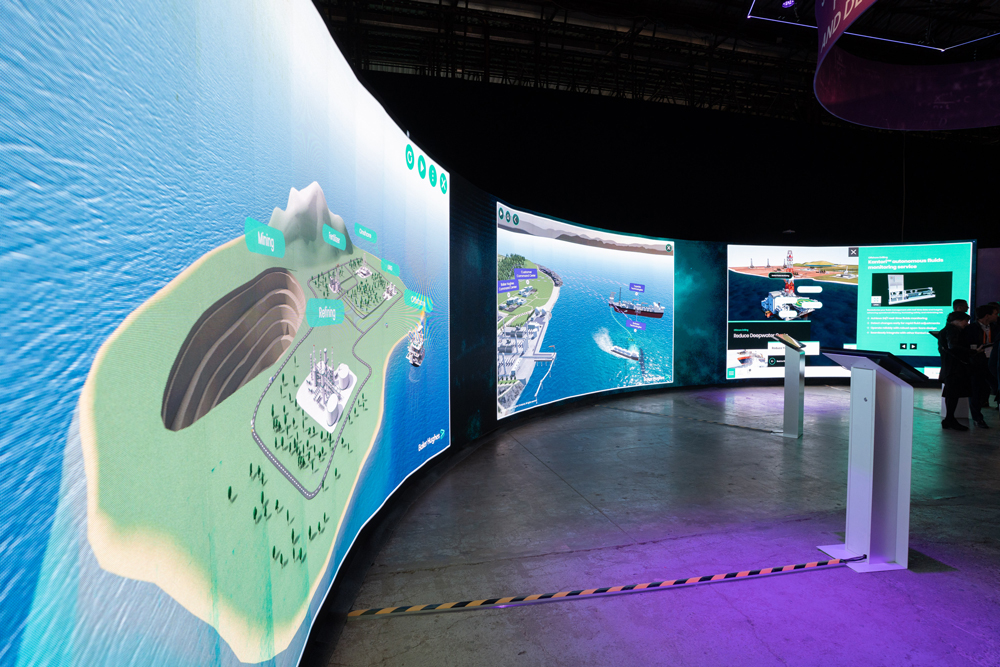
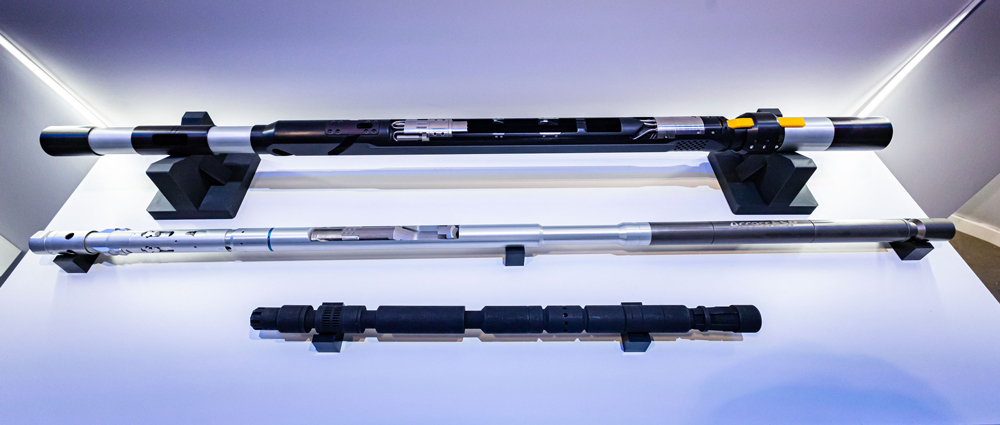
So, when we think in terms of efficiency, it really does come down to digital at the present time. At Baker Hughes, we’ve been very external with our Leucipa™ automated field production solution, Fig. 1. We actually had a customer advisory board during this event, where we had seven clients come in and present to us, and the feedback is excellent and real from the customer base in terms of how we are helping them maximize their assets. Then, when we think in terms of alternative deployment, we have our Access ESP (Fig. 2) portfolio, which is gaining traction, specifically in the Eastern Hemisphere and Latin America. We solely focus, or we intently focus, on the safety of our portfolio and the efficiencies that we can bring the customers, not just in terms of the lift itself, but how we can make their jobs easier and maximize their returns to their own companies and to their shareholders.
WO: In more specific terms, could you give a bit more detail about what you're doing in terms of safety and improving efficiencies, and how's that evolving? How is technology bringing some of those changes and getting more results from the safety side and the efficiencies?
RM: So, how does digital affect safety, if we reduce the people in the field by doing automated work? Again, going back to the Leucipa platform, it's made up in a modular way, where the clients can essentially pick whichever part of the platform they want. A key item in the artificial lift space is the ESP optimizer. Where the technology is intuitive, it uses the real-time data coming back from the client-specific field to give recommendations to monitor how the ESPs themselves are actually running. It also makes detailed and intelligent recommendations to the client and the production engineer, who's using the platform to give guidance on, make their set-point change, pay attention to what's happening here, sometimes recommending proactive pulling of the ESP.
All of that is geared towards lowering the customer's intervention cost. That is one of the client's key expenditures every year, having to work over ESPs. So, the digital aspect of things is bringing the people out of the field, which is good from a safety aspect and a cost aspect. But it's also proactive in protecting their CAPEX and OPEX expenditures in terms of workover intervention and having to buy new equipment, when we can proactively help them plan their workover operations out in the field.
Alternative deployment is something that is a significant driver for the customers. Our technology allows them to deploy ESPs and pull them without a conventional rig. So, when you think about offshore platforms, bringing in a rig is very expensive for the customer. If they can pull the unit and then redeploy it, using wireline technology, it's much cheaper, it's more efficient, it is much quicker, and it gives them greater flexibility on how they manage their offshore portfolio.
And the same for land-based operations. Bringing in rigs is expensive for the customers, so we have seen significant adoption of that technology, especially in remote areas such as Alaska where rig availability is low and costly. Then, obviously, that leans into the environmental aspect, again bringing rigs in is expensive and cumbersome. So, those are really the two key things that we are focused on from the digitization and then the alternative deployment.
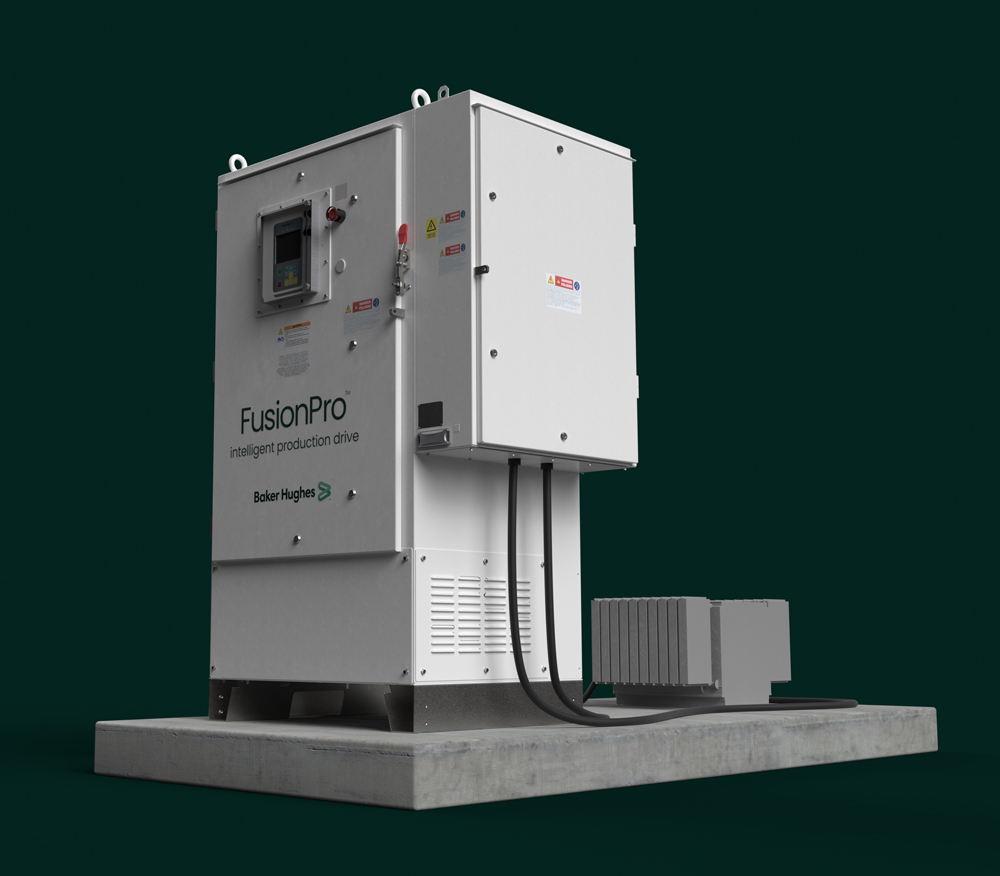
I'll take digitalization a step further. We have what's called our FusionPro™ intelligent production drive (Fig. 3) and that marries right into the Leucipa platform in terms of how it talks to that platform and gives the customer an entire view of how their whole operation is working. So, if I reverse back maybe five years, everything was spreadsheets. The production engineer would have to come in, in the morning, and focus on what was urgent then, and that was his day. What we are doing is we are segregating the urgent from the important in terms of intuitive technologies, to guide the engineers on the five things they need to focus on today. This maximizes their time, which means they can be more proactive from a planning standpoint, as regards viewing the next month or the next quarter for hydrocarbon production. So, it all knits together very well.
WO: The transformation over the past few years has been amazing. Let me ask a slight add-on to that question, which is, do you know how it might evolve in the next few years? Can you give us a little sense of what direction it's going?
RM: The direction will continue to evolve over the next three, five, seven, 10 years, and the ultimate goal is to reduce the number of people operating in dangerous positions and automate the work site. I work as part of the production solution segment for Baker Hughes, so we are married very closely to our chemicals division. Think about it in simple terms—every gallon or barrel of fluid needs chemical to treat it. That is a massive expenditure to the customer.
So, we continue to evolve the technology, to make sure we are optimizing the chemical treatment at the same time that ESPs are producing the hydrocarbons. And the more we automate, the fewer people we have in the field and the better our HSE outcomes. The vision that we have, and the vision that the clients have, is fully autonomous field locations, whether that is offshore or onshore. You're always going to have to have human intervention. You need to have people out in the field, but we can significantly reduce that with an eye towards efficiency and safety.
And we feel that we were proactive in the development of the CPAR, three or four years ago, to get ahead of the game, to partner with the customers, to let them realize that vision.
WO: Can you tell us a little bit about the recent awards you had in Kuwait and how the ALS is going there? Obviously, you had a lot of strength in the U.S., and now you're going out to the Middle East, as well. Can you talk a little about that?
RM: Absolutely. We are very proud of our performance and partnership with KOC over generations. We have been involved in that operation for a significant amount of time. Regarding the award, we are very pleased with the decision by KOC. We feel that we have partnered with them very well over the years. And KOC has also allowed us to deploy some of the new technology with them, as they have continued to advance their operations.
WO: Can you talk a little more about where you see your strengths and focus on ALS, compared to your competitors. Are there things that you could say about particular areas, or maybe it is something more to do with the technology?
MR: If you look at the history of Baker Hughes Artificial Lift, we've been number-one in the industry for decades. We have an installation base of over 47,000 ESPs globally. We are well-renowned in the industry for innovation. We've always been at the forefront in continuing to be the company that is a step ahead in how we innovate. A lot of it comes down to the customer relationships that we've developed over the years and being able to hear the first-hand voice of the customer on where they intend to go, you know, so we have an intent focus on the customer's interest in design.
When we design a product, we also look at how we can make it safer for our people and the industry. We look at how we can make it more efficient in terms of the return it will generate for the customer. But in terms of efficiency as well, how can you manufacture it more efficiently, especially if you think about our installation base. The more efficient we can become on the manufacturing side, the larger the return to the customer and the faster our speed of execution. We are very proud of our record in terms of innovation, holistically, and that's really at the forefront of everything that Baker Hughes Artificial Lift has ever done and will continue to do.
WO: Please talk a bit about the idea of risks. What are the key risks you see in your market and industry? On the flip side, what are the opportunities that come from these risks?
RM: We enjoy being number one, and we enjoy the challenge. It keeps us active, and it keeps us leading. In terms of risk, it's always the cycles in the market. For anybody that's followed oil and gas for years or decades, the peaks and troughs can be severe, when they happen. So, the biggest risk that we have is not being in tune with the customers and where the market is going.
Our largest market is North America land. I think everybody understands, from a geopolitical standpoint, some of the decisions that are being made right now, both positive, or largely positive, in terms of the oil and gas industry and where the administration wants to go. But the cyclical nature of North America land is always a key risk, and we are very aware and acutely in tune with what's happening in North America.
The mergers and acquisitions that have happened over the years, specifically in the North America-land market, have put the customers in a much more stable state. They are less reactionary. So, right now, we don't see much of a risk to the sustainability of the market. And then, throughout the years, we have learned that we need to be nimble from a manufacturing and overall global footprint standpoint. And I believe firmly that we've positioned the business well to ride the peaks and troughs, should they come. We can pivot up, and we can pivot down, as the clients maybe change their operating method or switch out their lift method. So, we feel pretty confident right now that we have structured and positioned the business to meet our clients’ needs in evolving market conditions.
WO: Any additional thoughts or a key message you would like to add to what you've already mentioned?
RM: If you think in terms of artificial lift holistically, we are the product line that gives the customers their return on investment. So, by the time it comes to artificial lift deployment, customers are spending a significant amount of money to get the well to that point, to start to get their return. We keep that at the forefront of everything that we do, because we are responsible for relationships that we have.
I see nothing but a very bright future for artificial lift, as we move forward. And when you think about the adjacent markets, as well, that we're now breaking into in terms of geothermal, CCUS and mining, we have developed alternative relationships with clients who are breaking into these markets. We are expanding significantly at Baker Hughes with our core population in oil and gas, which is the 47,000 ESPs deployed overall. But regarding the partnerships that we've developed over the course of the last two to three years with customers that are breaking into adjacent markets, we see nothing but growth coming over the next three, five, seven years.
WO: One last question about reversing those reservoir declines. Would you add about risk, in terms of the maturity across some of the fields, as being an opportunity?
RM: One of our key focuses at Baker Hughes is mature asset solutions, and that's across the broader portfolio of all the product lines that exist within the company. But how do we maximize every dollar that the customer has already spent? That's where, again, Leucipa comes into the equation. We can do reservoir analytics through our GaffneyCline™ energy advisory team and through Leucipa and make proactive recommendations to the customers on how they maximize the results that they've already tapped into.
And then, we look across the broader portfolio at Baker Hughes in terms of re-stimulation, re-completion, re-frac technology. We can bring the whole portfolio to allow the customers to maximize the assets that they have already completed and may have assured or depleted. But we have developed core technologies to allow the customers to maximize at the top. We have some pretty solid success stories with that, which we are very happy with, as are our clients. Mature assets solutions are a pivotal focus for our customers’ use.
ROSS MITCHELL is the Vice President of Artificial Lift Systems at Baker Hughes, where he leads strategic growth, operational performance, and technology deployment across the region’s artificial lift portfolio. With 19 years at Baker Hughes, he brings deep global experience, having begun his career in the North Sea and later serving in leadership roles throughout West Africa and the Middle East. Before joining Baker Hughes, Mr. Mitchell worked as a Senior Contracts manager for a major construction company in the UK, building a strong foundation in commercial execution and large-scale project oversight. Based in the United States for the past 14 years, he has held multiple key leadership positions spanning operations, product lines, and strategic development, with a predominant focus on the production sector. Mr. Mitchell actively supported the broader energy industry as a member of the API Upstream Committee and as a board member of TXOGA. He holds a degree in Contract Management from the Andrew Carnegie School of Business.
Related Articles- A Baker Hughes executive assesses the electrification effort (May)
- First Oil: OTC soldiers on for another year (May)
- OTC recognizes 2026 Spotlight on New Technology® Award winners (April)
- What's new in production: When everything is going wrong at the same time (April)
- SBM executive sees strong FPSO market on back of deepwater trend (April)
- IPAA’s annual meeting to re-visit site of association’s founding (April)
- Subsea technology- Corrosion monitoring: From failure to success (February 2024)
- Applying ultra-deep LWD resistivity technology successfully in a SAGD operation (May 2019)
- Adoption of wireless intelligent completions advances (May 2019)
- Majors double down as takeaway crunch eases (April 2019)
- What’s new in well logging and formation evaluation (April 2019)
- Qualification of a 20,000-psi subsea BOP: A collaborative approach (February 2019)