How space tech can help autonomous oil rigs become a reality
LEE ALHSTROM, VIASAT ENERGY SERVICES
When SLB’s top executive declared last year that “we will be autonomously drilling before we can autonomously drive,” it became abundantly clear just how quickly the energy sector is accelerating towards a new phase of digital transformation.
Energy operators are striving to reap the rewards of these advanced systems in the near future, deploying autonomous solutions to optimize offshore inspections and maintenance—and enhance operational efficiency and safety as a result.11
The challenge lies in seamlessly integrating these systems across vast and remote energy sites. Autonomous systems on rigs—whether offshore, onshore or in transit—must stay connected at all times. Even brief communication gaps can be costly or dangerous. Yet the very nature of energy machinery, often situated far beyond the reach of traditional networks and in unpredictable weather conditions, presents a critical connectivity challenge.
This is where space technology comes in. Resilient satellite connectivity enables precise remote monitoring and control of assets from onshore sites. This connectivity empowers IoT devices to control, track and monitor equipment 24/7, or even power drones for remote inspections and maintenance.
Such solutions enable oil and gas operators to reduce human exposure to hazardous environments and optimize resource allocation—tackling two of the industry’s long-standing pain points and making semi- and fully autonomous rigs a reality in the very near future.
HOW AUTONOMY OPTIMIZES SAFETY AND EFFICIENCY ON REMOTE RIGS
The drive towards autonomy is partly rooted in the inherent dangers of operating rigs in remote, complex and extreme environments. Onsite risks stem from heavy machinery, intricate operations and the constant potential for accidents. Beyond the rig, extreme conditions present transit dangers, including difficult terrain, long journeys putting strain on staff and equipment, and the risk of weather disruptions for vehicles or vessels.
With recent reports highlighting the risks that such dangers pose to crew, improved health and safety has emerged as a paramount concern and key focus for energy sector IoT applications.2 2Our own research has also shown this. IoT-enabled autonomy, such as the use of uncrewed aerial vehicles for inspections, remote cameras and remote-control devices, can fundamentally improve operational safety by removing personnel from high-risk zones.
Beyond safety, autonomy also bolsters efficiency and delivers significant cost savings for firms. Autonomous systems can operate 24/7 without fatigue, enabling a single operator to manage multiple sites remotely, optimizing resource allocation and substantially reducing operational costs.
Given the safety and efficiency benefits of increased autonomy, energy operators are eager for their rigs to work more independently. Paradoxically, however, operators also want continuous visibility into autonomous processes to ensure technology is performing as intended. Reliable connectivity is essential for both elements, enabling the always-on remote control required for autonomous operations, as well as providing operators with 24/7 oversight to ensure operations remain smooth. In this new era of autonomous tech, human beings sitting behind the wheel will be just as important as ever.
As explained, the challenge remains that so many oil and gas assets fall far outside traditional cellular service, such as those located in the deepwater Gulf of Mexico, Brazil or West Africa, where we provide significant connectivity solutions to drilling rigs and fixed platforms. This is true, not just in oil and gas, but across many industries that operate in remote areas. According to research from Viasat, 85% of surveyed professionals in industries like transport, agriculture, utilities and within energy have struggled to develop IoT because of connectivity issues in the areas they want to deploy.
THE NEED FOR SATELLITE CONNECTIVITY IN OFFSHORE OPERATIONS
The journey towards advanced autonomy in remote energy operations hinges on unwavering, ubiquitous “always-on” connectivity. Terrestrial networks possess inherent limitations in terms of coverage.
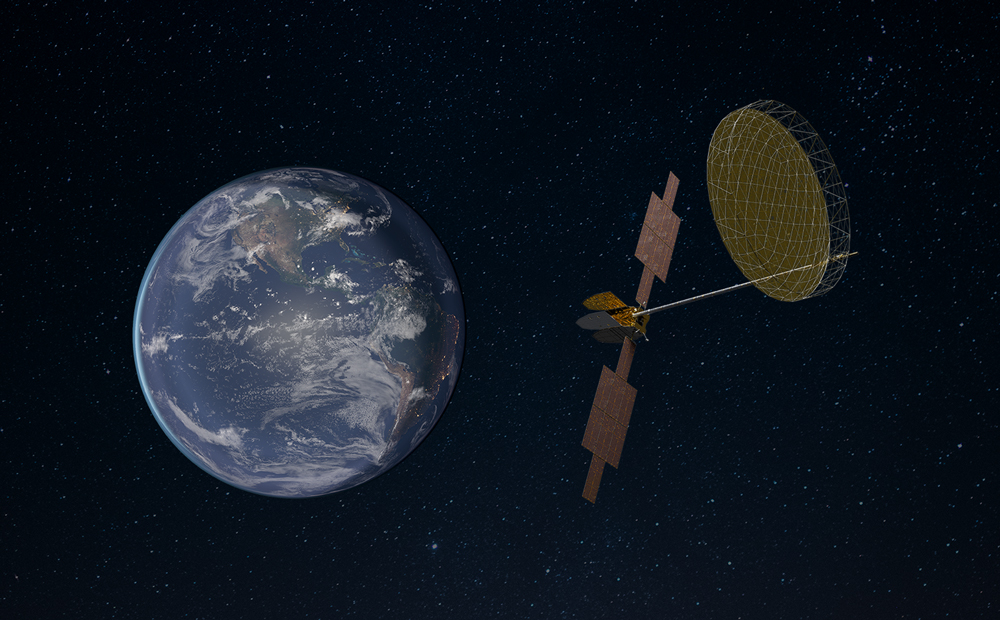
Constellations of advanced high-throughput satellites (Fig. 1) can provide the robust, always-on coverage required to facilitate real-time monitoring and control, making true autonomy possible in environments that terrestrial networks simply cannot reach. This connectivity forms the absolute core of enabling autonomy in remote locations, ensuring that autonomous systems on rigs, whether offshore or onshore, are never out of communication range.
For some, a hybrid approach integrating both terrestrial and satellite networks is the best option. Our research showed that many operators are using a mix of different connectivity technology, which can be useful depending on the location. This is where we see a new technology, called Narrowband Non-Terrestrial Networks (NB-NTN), come into play. NB-NTN allows devices to connect directly to terrestrial networks or satellites without the need for dedicated satellite terminal hardware, providing continuous connectivity regardless of location or environment.
POWERING AUTONOMOUS INSPECTION, MAINTENANCE AND LOGISTICS
Satellite-enabled IoT monitoring tools deployed across the rig continually assess machinery for signs of failure, using AI to flag abnormalities and predict potential issues. This continuous data stream—a torrent of information from wellheads, pumps, valves, generators, compressors, and environmental sensors—is transmitted via satellite links to onshore control centers. Autonomous AI systems then analyze these data in real-time to understand conditions, predict issues, and make operational decisions without direct human intervention. In turn, this allows for proactive adjustments, predictive maintenance, and immediate responses to anomalies: all critical for safe and efficient autonomous offshore operations.
Satellite services also play a pivotal role in remote command and control execution. Autonomous systems aren't just reporting data; they're receiving instructions. Without resilient connectivity, these tools cannot operate effectively. Satellite connections ensure that commands for adjusting drilling parameters, managing production flows, activating safety protocols, or directing autonomous vehicles are transmitted instantly and reliably to the rig’s automated systems—enabling operators to exert precise control even when they’re thousands of miles away.
What’s more, satellite connectivity is also the foundational layer that will enable the next generation of autonomous tools—drones, robots and automated vehicles—to improve inspection, maintenance, and logistics offshore further.
AUTONOMOUS INSPECTION VIA UNCREWED AERIAL VEHICLES (UAVS)
UAVs, also widely known as drones, are rapidly becoming the eyes in the sky for offshore and remote onshore operations. Operators can control devices from an office far away from the dangers of offshore rigs or challenging terrain. UAVs can perform a range of surveillance and monitoring tasks, from visual inspections of structural integrity, to monitoring stacked rigs and pipelines to thermal imaging to detect leaks.
This capability is entirely dependent on robust satellite connectivity to enable command-and-control technologies. Solutions such as Viasat’s Velaris are already powering real-time video feeds, navigation and data transmission within the nascent advanced air mobility sector. In the future, this could be applied at scale across the offshore industry. By enabling such sophisticated remote operation, satellite connectivity can eliminate the need for human presence in dangerous or hard-to-reach areas, making a safer working environment.
PREDICTIVE MAINTENANCE FOR AUTONOMOUS SYSTEMS AND EQUIPMENT
Monitoring machinery helps to prevent accidents, a principle that extends to the autonomous systems themselves. The shift from reactive to proactive maintenance minimizes unexpected failures, reduces downtime, and extends asset lifespan by identifying potential issues before they escalate.
IoT technology that collects data remotely and continuously monitors oil and gas pipelines can help reduce manual inspection costs and improve staff safety. Viasat Energy Services already monitors thousands of pipeline assets every day through our IoT solution. These solutions enable operators to assess environmental impact, integrity risks and reactivation readiness without the need for hazardous onsite visits.
REMOTE DIAGNOSTICS AND INTERVENTION
Taking this one step further, satellite connectivity also allows remote experts to diagnose issues with automated equipment and, in some cases, even perform software updates or minor interventions remotely.
Video monitoring services support remote inspections and help operators assess issues, schedule maintenance or dispatch help as required. This allows for more efficient resource allocation and, most importantly, removes staff from hazardous areas. Our AVI (Advanced Video Intelligence) solution is active in onshore and offshore operations worldwide, and uses advanced compression algorithms to perform at a fraction of the bandwidth of a traditional “raw” video feed.
AUTONOMOUS LOGISTICS AND HAULING
Satellite connectivity can also facilitate autonomous transportation opportunities for energy operators, enabling the command and control of autonomous trucks or other vehicles to transport materials, equipment and even personnel to and from remote sites.
Such solutions already exist. The longest fully autonomous train system in the world is currently operated by an Australian mining company, helping to reduce health and safety risks associated with transporting goods over vast distances, not to mention providing operational efficiency benefits. This highlights the profound potential for similar applications in the energy sector, offering precision and reliability that could revolutionize how resources are moved in challenging environments.
THE FACTORS DRIVING RAPID AUTONOMOUS ADOPTION
A major shift is underway in the cost-effectiveness of satellite-enabled IoT devices, driven by Narrowband Non-Terrestrial Networks (NB-NTN). This development allows a single IoT device to connect to both satellite and cellular connectivity through a single module, without the need for traditional satellite hardware. This substantially reduces the cost of devices and changes the calculation for return on investment for operators. In the coming years, as more IoT devices enter the market, we are likely to see a mass uptake of IoT across multiple industries.
As a result, it has become far more feasible for oil and gas firms to deploy satellite-enabled IoT solutions to monitor and control their assets. The scalability of NB-NTN allows for widespread deployment of trackers, enabling comprehensive oversight of personnel and assets across vast and remote energy landscapes.
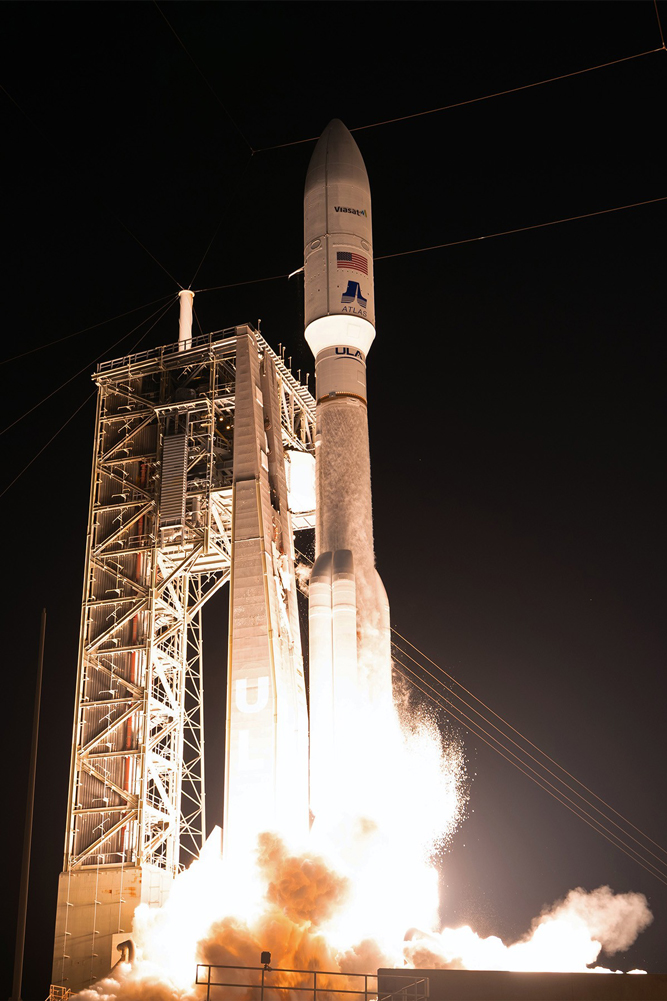
This scalability is critical for autonomous rigs, which will require thousands of interconnected sensors and actuators. Satellite-enabled NB-NTN provides the network capacity to support this vast ecosystem, making comprehensive autonomous oversight and control a reality without the prohibitive costs of previous generations of satellite technology. What’s more, satellite constellations are continually being expanded, as seen with the recent launch of Viasat’s ViaSat-3 F2 satellite (Fig. 2), indicating the capacity being implemented to support rigs seeking these always-on services.
This combination of cost efficiency and scalability is rapidly accelerating the adoption of satellite-enabled IoT across the industry, paving the way for more comprehensive autonomous operations on rigs in the near future.
Investing in satellite-enabled IoT is not just a solution for today’s industry challenges; it is a future-proofing strategy for the energy sector, ensuring operations can continue to evolve and innovate, securing long-term resilience and competitiveness as a result.
By providing ubiquitous and increasingly affordable communication services, satellite connectivity is mission critical to enabling real-time monitoring, remote control and the seamless deployment of autonomous tools like drones and automated logistics.
Looking forward, this space tech will help to make autonomous rigs a secure and efficient reality, ushering in a new era of safety, operational excellence and enduring resilience.
REFERENCES
- “Drone ops edging North Sea oil platform closer to autonomous offshore inspections,” Offshore Energy,June 2, 2025.
- “https://www.standard.co.uk/news/crime/health-and-safety-executive-north-sea-b1233447.html,” The Standard, June 17, 2025.
LEE AHLSTROM is president of Viasat Energy Services, leading the company’s managed communications and systems integration solutions for the global energy sector. Prior to Viasat’s acquisition of RigNet, he served as RigNet’s senior vice president and CFO. He previously held senior leadership roles at Paragon Offshore, Noble Corporation, Burlington Resources, and Unocal. Mr. Ahlstrom holds both a Bachelor’s and a Master’s degree in mechanical engineering from the University of Delaware and has more than 20 years of experience in finance, strategy and operations.
Related Articles- Middle East jackup fleet continues to shrink following Saudi suspensions (February)
- Rugged, explosion-proof computers safeguard offshore rigs (January)
- From impossible to inevitable: Superhot rock geothermal to unlock gigawatts of energy (January)
- Drilling advances: Bottlenecks? What bottlenecks? (January)
- The evolution of remote-controlled FPSOs (January)
- Halliburton’s ZEUS IQ™ powers the first fully autonomous fracturing platform with closed-loop automation (January)
- Subsea technology- Corrosion monitoring: From failure to success (February 2024)
- Applying ultra-deep LWD resistivity technology successfully in a SAGD operation (May 2019)
- Adoption of wireless intelligent completions advances (May 2019)
- Majors double down as takeaway crunch eases (April 2019)
- What’s new in well logging and formation evaluation (April 2019)
- Qualification of a 20,000-psi subsea BOP: A collaborative approach (February 2019)