Late-life field management: Repair, repurposing and obsolescence management support sustainable well integrity
MIKE CROWE, Score, a D2Zero company
As the oil and gas industry faces growing financial pressures, operators are increasingly managing mature assets far beyond their original design lives. Responding to reservoir decline, changing production strategies and shifting regulatory requirements are important operational considerations in mature fields. In this environment, late-life field management focuses heavily on well integrity, cost control and risk management.
As a result, maintenance philosophy is changing. Where a full system replacement was once the default response to component degradation or failure, opex-conscious operators are now adopting smarter strategies focused on repair, repurposing and requalification, where possible. There are many examples across multiple sectors of the oil and gas industry where this evolution of emphasis is evident. From surface wellhead systems and Christmas tree assemblies to oil and gas pipelines and even through to terminals and processing facilities, components can frequently be restored to full functionality without wholesale replacement.
When considering effective well integrity as part of late-life field management, efficient obsolescence management can also play a critical role. As equipment ages and original equipment manufacturer (OEM) support diminishes, the ability to engineer suitable alternatives while maintaining compliance is becoming central to sustaining safe and sustainable production in late-life assets.
Combining repair, repurposing and obsolescence management can create an effective solution for operators seeking to extend the performance and financial viability of late-life fields.
ENSURING WELL INTEGRITY IN LATE-LIFE ASSETS
Mature assets present a distinct well integrity challenge. However, in the evolving energy landscape, one principle remains constant: well integrity is the foundation of safe and sustainable well operations. From extending the lifespan of assets to protecting people and the environment, ensuring that assets remain secure is central to responsible energy production. The consequences of neglecting it can be severe.
Equipment, such as surface wellhead and Christmas tree assemblies that have been in service for decades are exposed to varying pressures, temperatures, erosion and corrosion that can contribute to a range of degradation issues, affecting performance and sealing integrity. Internal corrosion can progressively reduce material thickness and alter surface finish, while erosion can compromise trim geometry and sealing faces.
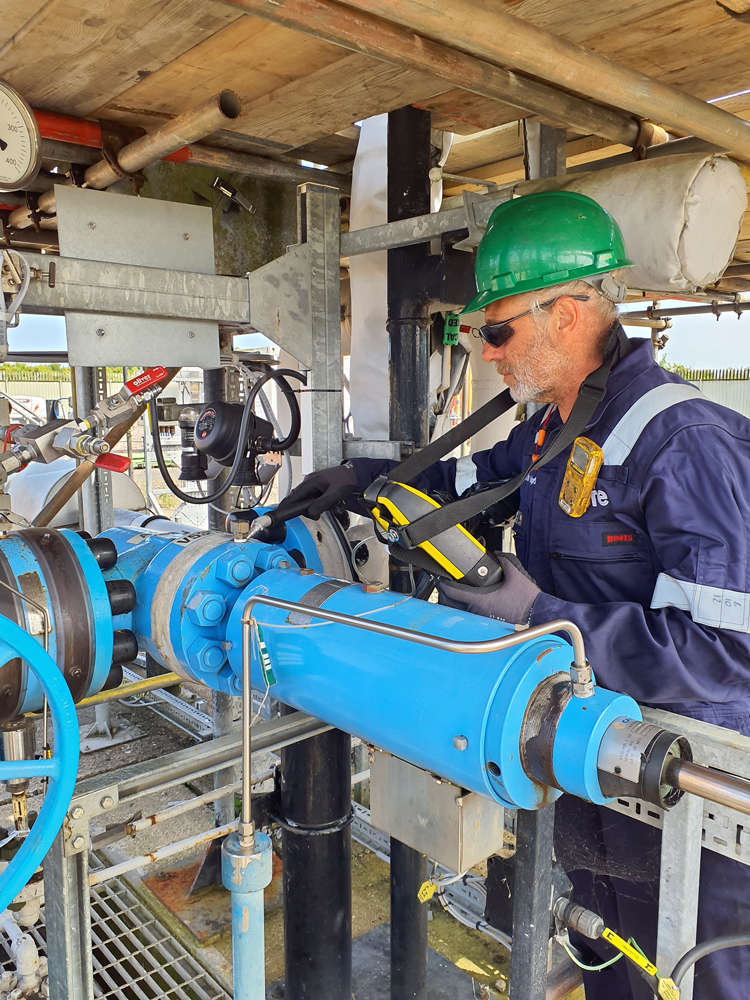
For valves and their associated components, scarring and galling may occur, due to repeated operation under load, and metal-to-metal contact can accelerate wear where protective coatings have degraded. Misaligned seals, stem leak and through-valve leakage may develop, as components extend beyond their original tolerance range. Gear box contamination and external corrosion to actuators and exposed surfaces can impair the functionality of actuated assemblies.
In many cases, the valve body and major pressure-retaining elements remain structurally sound. It is often internal components, actuators or sealing systems that degrade first. Traditionally, such findings frequently resulted in full equipment solutions. A failed actuator or worn trim assembly could trigger recommendations for full valve replacement or broader system upgrade.
As a result, in an industry under increasing financial and operational pressure, it is not uncommon for maintenance or inspection scopes to be reduced or delayed, Fig. 1. Budget constraints, tight schedules, production targets, extended lead times for new equipment and the complexity of Management of Change (MoC) processes can all contribute to integrity work being viewed as something that can wait.
This short-term approach can carry long-term risks. Inertia may be caused by an overestimation of the financial scope of work required. Having a more accurate assessment of what needs to be replaced, where life can be extended, and the options for obsolescent components can provide a more realistic, less daunting and more financially acceptable perspective.
SPECIALIST COATING EXTENDS COMPONENT LIFE AND AVOIDS REPLACEMENT
In a recent project, Score, a provider of advanced engineering technology services in sectors including valve and emissions management, gas turbines, surface technologies and energy, successfully executed an offshore wellhead repair involving Christmas tree valve internal components.
Leveraging an in-house coating facility meant that the damaged components could be repurposed, rather than replaced. The refurbishment process included electrolytic coating removal, pre-grinding to ensure components were parallel and free from damage or scoring, and the application of tungsten carbide via the High Velocity Oxygen Fuel (HVOF) process, which produces a dense, high-adhesion coating with excellent wear resistance. This was followed by final grinding and lapping.
HVOF can support the restoration of critical wellhead internals, particularly valve trim and sealing surfaces, without requiring replacement of the entire component. From a materials engineering perspective, tungsten carbide applied through HVOF provides high hardness, improved erosion resistance and enhanced durability. When executed under controlled conditions, the restored component can meet or exceed original OEM specifications. All components underwent rigorous inspection before reinstallation.
Repurposing rather than replacing the damaged parts provided a cost saving of approximately 40%, compared to the procurement of new OEM components, while also drastically reducing lead time. Following the success of the repair, the customer revised its spares management strategy, so that all relevant removed critical spares were routed through Score for repurposing/requalification and subsequently incorporated into the customer’s spares stock rotation program.
Repurposing existing components can also improve environmental performance by avoiding scrapping and the emissions associated with manufacturing and transporting new equipment. In an industry increasingly focused on emissions reduction and material efficiency, life extension provides environmental value without compromising integrity.
OBSOLESCENCE MANAGEMENT: A CRITICAL COMPONENT OF WELL INTEGRITY
Equipment obsolescence presents a considerable issue in mature fields. Many late-life assets operate with equipment that is no longer manufactured or supported by the original equipment manufacturer. Components, such as actuators, trim assemblies and control components, may be discontinued, leaving operators exposed to extended procurement lead times or forced system upgrades.
Replacing equipment no longer supported by the OEM can carry a significant cost. Obsolete components can be a risk to safety, reliability and production efficiency. They can lead to unexpected product losses, costly unexpected interruptions to production, increased fugitive emissions and reactive operational decisions, often at short notice.
Changing an obsolete component can force an unplanned shutdown, trigger complicated MoC processes, and result in lengthy lead times. In extreme cases, these can be a year or more. Obsolescence management must therefore be regarded as a critical component of well integrity.
REDUCING OEM DEPENDENCY IN LATE-LIFE ENVIRONMENTS
Equipment is routinely kept in service, well beyond its original design life, often because it remains fundamentally sound. Obsolescence is commonly found during routine maintenance when replacement components are required.
When considering valves, for example, the most common problem areas include the valve stem, the stem packing, trim components, gear boxes, and actuators. From a sample of 22 North Sea-based emergency shutdown valves, whose failure was reported to the HSE, 80% were due to actuator failure.
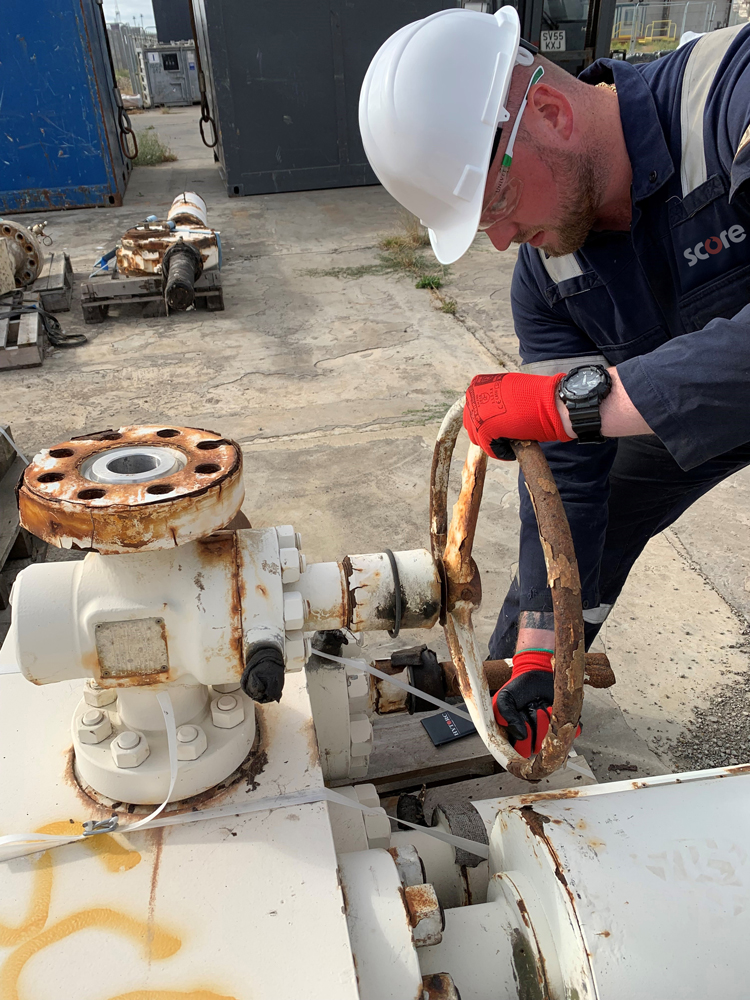
Valves and their associated components can become harder to operate for various reasons, including internal corrosion, erosion, age, mistreatment by operatives, scarring, galling and general wear, Fig. 2.
Other issues can include over-torquing, misaligned seals, environmental ingress, metal-to-metal contact, misalignment of the actuator during valve overhaul, stem leak, through-valve leakage, gear box contamination and external corrosion to the actuators and exposed surfaces.
Individually, these problems may appear manageable. However, when combined, they often lead operators to consider a more expensive and often unnecessary full-system replacement. Furthermore, straightforward replacement can become more complex, if the OEM no longer manufactures or supports the old component.
At this stage, asset owners usually consider two options. They can engage with the OEM and buy their latest version of the component (assuming the OEM is still in business). This might mean having to pay for a full system replacement, just to get the required part. Alternatively, they can enlist another supplier to provide a new replacement system. This can lead to a lengthy and complex Management of Change (MoC) documentation process, involving detailed risk assessments, design justification, functional equivalence reviews, and multiple layers of approval.
In both scenarios, what may start as a maintenance issue can become a business-critical problem, creating significant and unexpected costs, increased exposure to safety risks and operational disruption.
However, in many cases, a full system swap-out is not necessary. For example, a valve body may remain structurally sound while an actuator, gearbox, or stem assembly has failed or is no longer supported. Older mounting interfaces may predate modern standards. Internal components may have suffered wear and tear.
While these issues must be fixed, on their own, they may not automatically justify replacing an entire system. However, in some cases, maintenance teams may feel encouraged in this direction, as OEMs that prioritize production of new designs over parts for older designs. As a result, obsolescence is often managed reactively and under pressure, when the options are limited, and risks are highest.
Effective obsolescence management can provide a more efficient alternative. Obsolescence management focuses on preserving what still works, while applying modern engineering standards to address what does not. In this way, modern replacements can be designed to integrate safely and compliantly with existing equipment.
THE VALUE OF EFFECTIVE OBSOLESCENCE MANAGEMENT
Late-life fields are particularly vulnerable to non-productive time. A single actuator failure, valve stem packing leak or machining tolerance issue can halt operations.
Often, it is during a failure that most operators encounter obsolescence for the first time. However, the greatest value comes from addressing obsolescence earlier. Planned obsolescence assessments help identify high-risk assets before they fail, understand component availability, and prioritise interventions during scheduled outages. This reduces exposure to unplanned downtime.
A robust approach to obsolescence management begins with a functional assessment to determine which components are critical to operations, which are legacy but still fit for purpose, and which no longer meet modern safety or performance standards. Having undertaken a functional assessment, more informed decisions can be made about repair, replacement, or life extension.
Extending the life of existing equipment can deliver better outcomes than wholesale replacement in many cases. Re-engineering can allow old components to be recreated or improved, using modern materials, coatings, and manufacturing techniques. Design verification and testing ensure compliance with current standards. Performance can often be enhanced beyond original specifications.
This approach can reduce disruption, shorten lead times, limit the scope of change, and avoid MoC processes. It can also reduce the carbon footprint associated with manufacturing and transporting new equipment. In this way, obsolescence management can become a strategic advantage, rather than an emergency response.
RE-ENGINEERING REPLACEMENT COMPONENTS FOR HYDRAULIC ACTUATOR
A 40-year-old valve and actuator assembly for a 12-in. 600# ball valve installed on the production train of an export gas line required to be re-engineered. The valve was out of use, and the platform’s output was restricted, due to the potential loss of the line as a stand-by measure. The longer the valve remained out of service, the greater the risk of supply disruption.
Inspection showed that the valve required only a minor refurbishment. However, the actuator had failed in service and was severely damaged, requiring the replacement of multiple components.
The list of damage to the actuator and the components to replace included the piston cylinder, piston rod and piston, the end cap and inner end cap, the adjustment screw, the guide block, replacement seals and bushings.
It was established that an OEM replacement actuator would take up to 20 weeks to arrive. However, it was possible to design, manufacture, paint, test, assemble and reinstate the replacement non-OEM actuator and all soft goods within two weeks. This restored operability and avoided a prolonged production risk.
REVERSE ENGINEERING COMPONENTS REDUCE EXPENDITURES
Sphere launcher release fingers were damaged and required an overhaul. However, the OEM no longer manufactured the product, and failure would have prevented sphere launching, ultimately forcing platform shutdown and cessation of production. Replacing the fingers would have been impossible without a full system and pipeline change, with long lead times.
The operator faced significant operational challenges. Manual workarounds would have required additional vessel support, increased personnel exposure, extra time for repeated venting down of the launcher, product losses and higher emissions. The loss of two of the release fingers meant the launcher could not hold as many spheres, so more loading operations were required, meaning more vent-down activities.
A tight operational window required a timely solution. Missing the deadline would have meant several months of venting down the launcher until a new window occurred. The components were remanufactured, and the functionality of each one was assessed. The operating mechanism was redesigned to reduce wear and eliminate galling. The assessment identified that the assembly didn’t have an anti-blowout feature. Furthermore, under hydrostatic test conditions, the ejection load exceeded the maximum allowed by the actuator, creating a safety risk.
Design modifications were proposed and agreed with the client. The full assembly was remanufactured, CE marked and validated through CFD analysis to determine the maximum side loading imposed on the fingers. Physical testing proved the re-engineered assembly could withstand such loads.
The complete solution was delivered within eight weeks, meeting the shutdown schedule. Obsolete equipment was returned to service. Safety risks were eliminated. Additional emissions associated with temporary workarounds were avoided, and production disruption was prevented.
RAPID FIELD RESPONSE CAN AVOID NON-PRODUCTIVE TIME
In well integrity, rapid field interventions and a quick technical response can be critical in preventing problem escalation. Examples where fast response has generated significant benefits are numerous.
In one case, during dry recompletions, a manufactured spool was identified as having been machined incorrectly by a third party. On-site machinists re-machined the spool end connection within 12 hours, minimizing rig downtime and associated costs. In another instance, during a straddle installation, an out-of-spec drift was supplied to the site. The drift was machined to the correct specification within two hours of receipt and returned to the site on the same day.
In another example, operational integrity was restored through targeted intervention, where Christmas tree-actuated wing valves could not be opened, due to insufficient differential pressure. Equipment was mobilized the same day; pressure was applied, using specialized pumping equipment, and production was reinstated. Elsewhere, when annulus integrity approached maximum allowable annular surface pressure (MAASP), due to a failed wellhead seal, a sealant injection package was deployed, the leak path identified, and in-house-manufactured sealant was injected to quickly restore containment.
In another case, an external gas release through a production wing valve stem was resolved by re-energizing the packing system, allowing the well to return to production within 24 hrs. In another example, failed Christmas tree upper master valve actuator piston seals were repaired in situ, restoring operation within 48 hrs. These examples illustrate that rapid mobilization, combined with engineering capability, can preserve uptime and reduce exposure to non-productive time (NPT).
A STRATEGIC SHIFT IN MAINTENANCE PHILOSOPHY
The changing approach to late-life field management—prioritizing repair over replacement where possible—reflects a shift in mindset. This approach requires robust inspection and testing regimes, data-driven decision-making and clear acceptance criteria for repair versus replacement. It also requires the integration of obsolescence management into long-term integrity planning.
WELL INTEGRITY IN LATE-LIFE FIELD MANAGEMENT
The fundamental objective of late-life field management remains the safe production and containment of hydrocarbons. To ensure this, effective well integrity is critical.
HVOF restoration, reverse engineering, structured obsolescence management and rapid-response field capability can enable operators to maintain well integrity without unnecessary capital replacement. Disciplined engineering, optimized refurbishment and proactive obsolescence management can support late-life fields to operate safely, reliably and efficiently throughout their extended life cycle.
MIKE CROWE, Global Well Integrity manager at Score, a leading engineering technology provider, has nearly 30 years of experience in the energy industry. His career spans hands-on wellhead equipment overhaul, offshore roles with well intervention companies, Well Integrity engineer positions for major operators, and leadership roles across operations and client relations. Today, Mr. Crowe leads the strategic growth and global expansion of Score’s Well Integrity division, helping clients across the globe improve well integrity, operational performance, and efficiency throughout the asset lifecycle.
Related Articles
- Shifting from calendar to usage-based maintenance: Proven results that demand your attention (June)
- Enhancing Lower Tertiary recovery and profitability: The options – Part 2 (May)
- Nova Scotia’s Premier aims to revive province’s oil and gas activity (May)
- First Oil: OTC soldiers on for another year (May)
- OTC recognizes 2026 Spotlight on New Technology® Award winners (April)
- A deep understanding of flow patterns and pressure fields (April)
- Subsea technology- Corrosion monitoring: From failure to success (February 2024)
- Applying ultra-deep LWD resistivity technology successfully in a SAGD operation (May 2019)
- Adoption of wireless intelligent completions advances (May 2019)
- Majors double down as takeaway crunch eases (April 2019)
- What’s new in well logging and formation evaluation (April 2019)
- Qualification of a 20,000-psi subsea BOP: A collaborative approach (February 2019)