First Oil: Renewed enthusiasm exuded in Canada and within IPAA
KURT S. ABRAHAM, EDITOR-IN-CHIEF & CHIEF FORECASTER
If it’s June, it must be conference and exhibition time in multiple places. Indeed, we saw the Global Energy Show (GES) in Calgary amid a much more upbeat tone that this editor hasn’t seen in Canada’s upstream sector in 10 years. Meanwhile, south of the border, the Independent Petroleum Association of America (IPAA) held its annual meeting in Colorado Springs. This event exuded more “energy” than in recent past years, and it featured a strong program. It was encouraging to see the enthusiasm from industry professionals at both events. So, let me examine each event in greater detail.
GES mirrors improved attitude across Canada’s upstream. The GES was held June 9-11, and it brought together more than 38,000 attendees, and 500 exhibitors and delegates from over 100 countries to discuss energy security, investment and the future of global energy development. This represents a 5%-to-6% gain in attendance from the figure registered during the 2025 edition of GES.
Event organizer dmg events attributed the higher attendance and increased international participation to “the event's influence as a global forum for energy, investment and infrastructure discussions.” However, this editor would credit these improved numbers to not only events in the Middle East but also to last year’s departure of former Prime Minister Justin Trudeau. It’s no secret that Trudeau’s administration over 10 years pushed a heavily renewables-laden agenda, along with a strong nod toward excessive environmentalism. In those many years, Canada’s oil and gas sector experienced stunted growth. While current Prime Minister Mark Carney has not exactly been perfect, he has loosened up energy policy enough to give oil and gas professionals a renewed sense of optimism.
Held at Calgary's BMO Centre, GES featured a good array of speakers, including government officials, energy executives, investors and technology leaders examining the geopolitical, commercial and technological forces shaping the energy sector. A recurring theme throughout the conference was Canada's role as a reliable energy supplier amid growing global demand and increasing concerns over energy security.
“Canada is back as a serious energy country. Canada is back as a place to invest capital,” Canadian Minister of Energy and Natural Resources Tim Hodgson said during the event's opening session. Alberta Premier Danielle Smith highlighted the province's resource base, regulatory framework and ongoing efforts to attract investment and support project development. “We welcome continued partnership and collaboration with industry, governments and investors from around the world,” said an enthusiastic Smith.
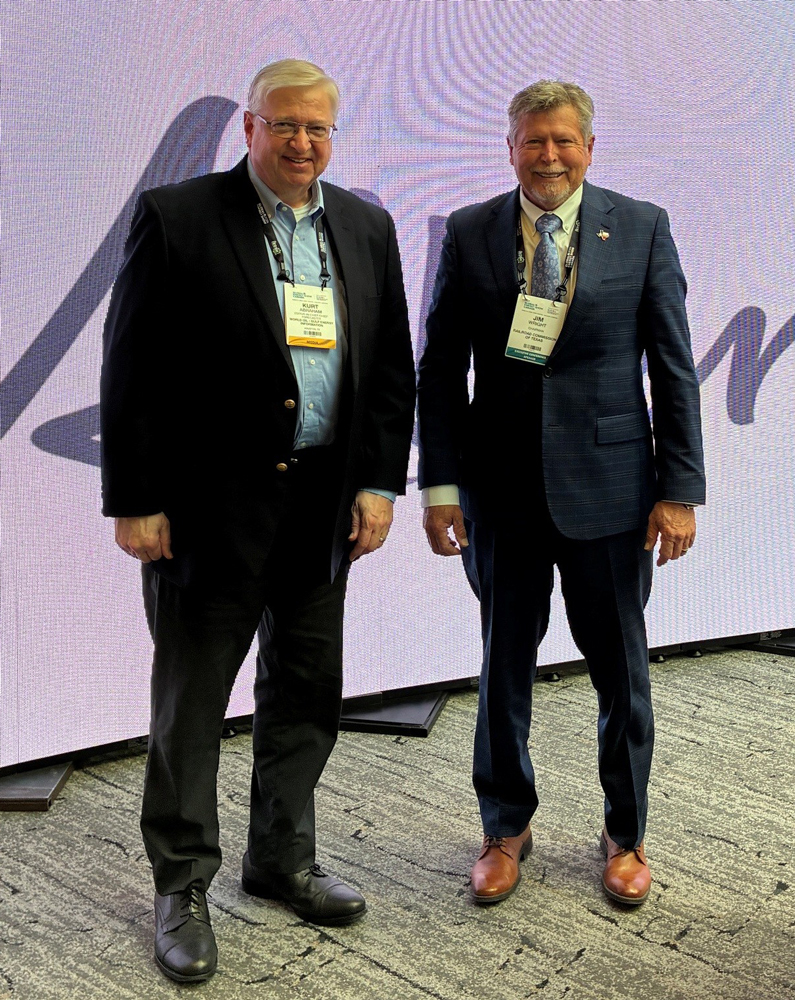
Railroad Commission of Texas (RRC) Chairman Jim Wright made the trip from Austin to Calgary, signifying the importance that the RRC places on working with Canada to ensure mutual energy security between that country and the U.S. Accordingly, he participated in a panel discussion on early Tuesday (June 9) afternoon.
“My purpose in coming up here is because I've been saying this now for quite some time,” Wright told World Oil afterwards, Fig. 1. “In Texas, we've got a lot of oil, but our oil is a sweeter, lighter crude…so, although our crude works as a blend, it doesn't work in every market. The reason I wanted to come to Calgary is that Canada has 18-19 specific gravity oil that, when mixed with our oil, will make a lot more blends than what our own oil does now. This, to me, gives us more exposure to markets throughout the world. And I think, given the way the geopolitics are looking today, it's going to be important for us to have these types of partnerships, as with Canada. And I'm looking at them as being more stable than anyone else. (Editor’s note: An exclusive full interview with Chairman Wright will be forthcoming on the World Oil website and in the July issue.)
In general, conference discussions focused heavily on LNG development, energy infrastructure, artificial intelligence, data centers, critical minerals and global energy trade. Industry leaders also emphasized the importance of market access and international partnerships in supporting future energy growth.
International participation included delegations and representatives from Asia, Europe, the Middle East, Africa and North America, reflecting growing interest in Canada's role within global energy markets.
The event also served as a venue for new business partnerships, strategic agreements and discussions on investment opportunities across the energy value chain. Executives and policymakers repeatedly pointed to rising global energy demand and the need for continued investment in infrastructure and supply development.
ARC Financial Corp. CEO Brian Boulanger told attendees that global demand for Canadian energy remains strong, while other speakers highlighted opportunities for expanded cooperation in LNG, carbon management and energy technology.
Organizers said the event generated an estimated C$70.6 million in economic impact for the Calgary region. Global Energy Show Canada will return to Calgary June 8-10, 2027.
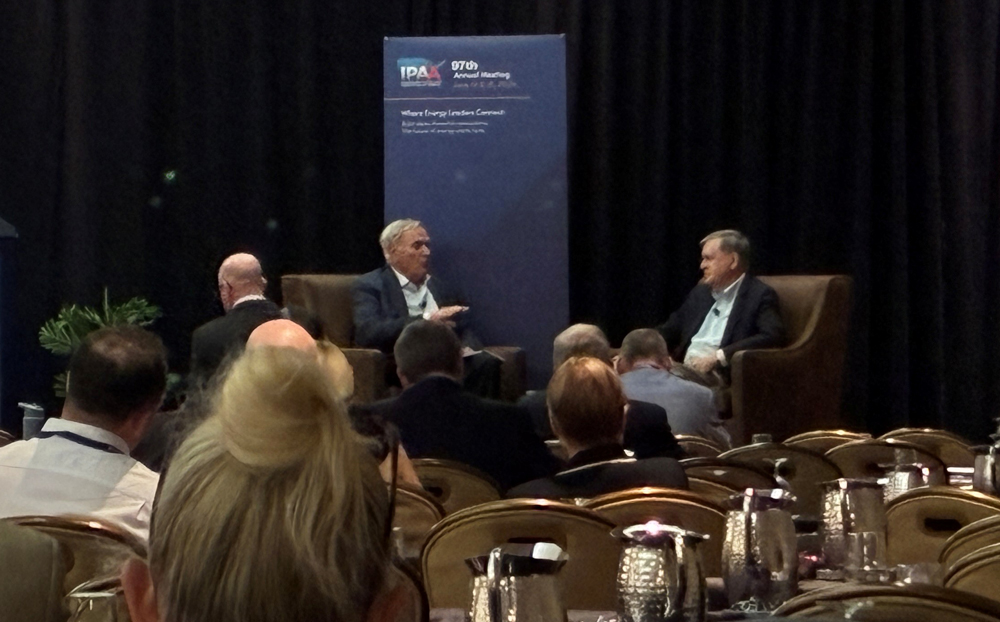
IPAA puts forth solid effort at annual meeting. Just like the Global Energy Show, IPAA achieved an increase in attendance at its annual meeting in Colorado Springs. Some of that may have been due to the critical issues affecting independents, like permitting reform, commodity prices, environmental regulatory reform and the Middle Eastern situation. And some of the increase might have reflected interest in the strong agenda that IPAA assembled for this annual meeting, Fig. 2.
But this editor also suspects that the location of the meeting—The Broadmoor hotel and resort—might have attracted a few more folks, with its high-end facilities and world-class Rocky Mountains backdrop. It’s certainly a very pleasant place to hold any event. Of course, The Broadmoor holds deep meaning for IPAA, because it was at this very location that U.S. independent producers back on June 10, 1929, formed this association, when they didn’t like what they heard from then-President Herbert Hoover’s Secretary of the Interior, Ray L. Wilbur during Hoover’s national and state Oil Conservation Conference. So, the IPAA has been returning to The Broadmoor periodically for meetings ever since, over the last 97 years. And in 2029, IPAA will again holds its annual meeting at The Broadmoor, to celebrate its 100th anniversary. If you’re wondering where IPAA’s annual meeting will be next year, it will be at the Boca Raton resort in Florida.
IPAA/DEPA merger. The most significant news coming out of this event is that IPAA and DEPA (Domestic Energy Producers Alliance) are merging, effective July 1, 2026. These associations say that they are doing this “to better advocate for the interests of America’s independent oil and gas producers.”
IPAA has represented independents for 97 years, while DEPA was co-founded in 2008 by Continental Resources founder and Executive Chairman Harold Hamm. At present, Hamm is still DEPA’s chairman. Leaders for both groups are touting the merger as a case of being “Stronger Together” and creating “One Voice for American Independent Oil & Gas Producers.” While at The Broadmoor, IPAA’s board of directors approved the merger with DEPA on June 17. But such a merger requires a two-thirds affirmative vote by the IPAA membership present, so a vote was taken on June 18. The membership proceeded to approve the merger with a unanimous voice vote.
"The Independent Petroleum Association of America (IPAA) and the Domestic Energy Producers Alliance (DEPA) voted this month to consolidate under the IPAA brand, effective July 1, unifying the voice of independent producers of oil and natural gas across the country and strengthening our position as an advocacy organization in Washington,” said IPAA President and CEO Edith Naegele. "For nearly 100 years, IPAA has served America's independent oil and natural gas producers, while DEPA has emerged as an influential advocate for the industry under the leadership of Harold Hamm. This merger marks a defining moment for America's independent oil and natural gas industry.
"America’s independent producers helped transform the United States from a nation concerned about energy scarcity into the world’s leading energy producer,” continued Naegele. “By uniting nearly a century of industry leadership with one of the most effective and influential advocacy organizations in American energy, we create a single, stronger IPAA voice for America's independent producers. "At a time when the world is looking to the United States for energy leadership, this unity carries significance far beyond our industry. As one voice, we will be better equipped to advance the policies needed to sustain American energy leadership, support our allies, and deliver abundant, affordable, and reliable energy for generations to come."
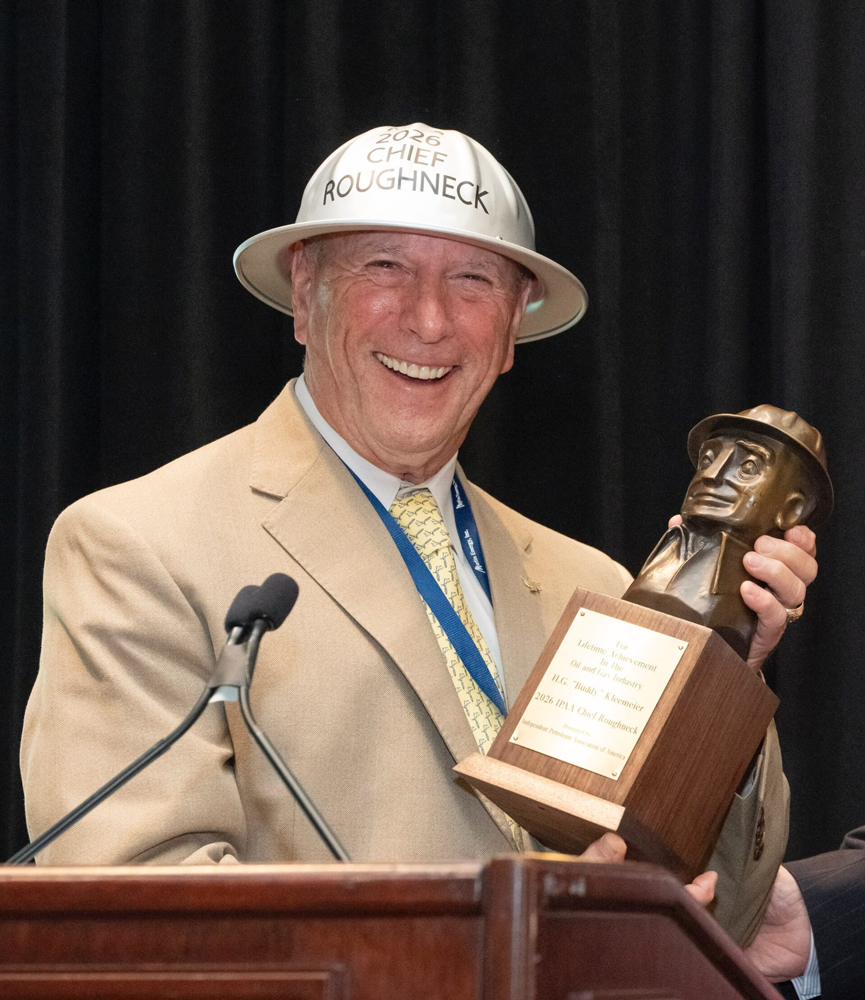
Chief Roughneck selection. The other significant news to come out of the IPAA annual meeting is this year’s selection of the annual Chief Roughneck award. On June 18, Buddy Kleemeier, Chief Executive Officer of Kaiser-Francis Oil Company (KFOC), was presented with the 2026 Chief Roughneck Award, Fig. 3. This was the 67th annual presentation of this oil & gas lifetime achievement award. It dates back to 1955, this award has long recognized individuals whose leadership and innovation have left a lasting mark on the industry. The award recognizes one individual whose accomplishments and character represented the highest ideals of the U.S. oil and natural gas industry.
The award was given on June 18 during the 2026 IPAA Annual Membership Luncheon sponsored by U.S. Steel. The award was presented by Tubular Synergy Group and the Byron Dunn Family. “Buddy Kleemeier’s years of service and leadership reflect the very best of IPAA independent oil and gas producers,” said IPAA President and CEO Edith Naegele. He has given freely and generously of his time, advocating in the halls of Congress and in the great state of Oklahoma for our shared industry. Buddy is an integral part of the fabric of IPAA. We are honored to recognize him with the Chief Roughneck Award in 2026.”
“I am humbled to receive this very prestigious industry award," said Buddy Kleemeier. "The IPAA has been the glue that holds the independent producers together. When I look at what our industry has done in my lifetime to take horizontal drilling and multistage fracture stimulation technologies and turn the United States into the world's largest powerhouse of oil and natural gas production, I find it amazing. That achievement is because of the independent producers that IPAA represents."
Kleemeier has led Tulsa-based KFOC since 2004. In his more than 40 years with the company, he has overseen the growth of KFOC’s exploration and development efforts in the Mid-continent, Texas, Wyoming, Louisiana, North Dakota, and Western Canada. While CEO, he helped create and manage Excelerate Energy (EE) in 2003, a privately owned LNG Regas vessel operating company and assumed chairman responsibilities of KFOC subsidiary Cactus Drilling Company (CDC). CDC is the largest privately owned land-based drilling company in the U.S. with 49 operating rigs currently (9% of total land rigs operating in the country).
Kleemeier graduated from Texas A&M University in 1966 as a petroleum engineer, and in 2008 was named to the Texas A&M petroleum engineering academy of distinguished graduates.
IN THIS ISSUE
Special focus: Artificial Lift. We have five articles in this month’s lead theme, four of which are from four of the “Big 5” service companies. Halliburton has a piece that describes how extended-length gas separation improves ESP stability in slug-prone Permian wells. This is followed by a Lufkin expert explaining how faster well design is reshaping rod lift optimization. Then, an SLB author details how a multiphase surface pump has boosted revenue for Pemex while reducing costs and environmental impact. After that, a Weatherford author describes how permanent magnet motors attract powerful savings for existing ALS technologies. Finally, a Baker Hughes executive assesses how the artificial lift market continues to evolve globally, and how his firm is playing a key role with innovative technologies that enhance the performance of ESPs and provide operators with greater efficiencies, lower costs, and improved safety.
Production optimization. Three QuantumPro authors discuss how a multi-tracer stage-level injection test validates production-flow and tracer quantification in a Middle Bakken well. The field study evaluated transient flowback measurement consistency across five completion stages, using 50 unique liquid-phase nanoparticle tracers and monitoring oil and water production over five discrete sampling intervals.
Exploration technology. A Viridien author examines the process of unlocking the untapped potential of legacy seismic data, using modern processing and imaging technology. A technical reassessment of legacy acquisitions in mature basins can often yield some impressive values for the operators.
Related Articles- Shifting from calendar to usage-based maintenance: Proven results that demand your attention (June)
- Nova Scotia’s Premier aims to revive province’s oil and gas activity (May)
- First Oil: OTC soldiers on for another year (May)
- Regional Report: Gulf Of America/Mexico (April)
- America’s promising Lower Tertiary frontier: Two decades, what has industry achieved—Part 1 (April)
- SBM executive sees strong FPSO market on back of deepwater trend (April)
- Subsea technology- Corrosion monitoring: From failure to success (February 2024)
- Applying ultra-deep LWD resistivity technology successfully in a SAGD operation (May 2019)
- Adoption of wireless intelligent completions advances (May 2019)
- Majors double down as takeaway crunch eases (April 2019)
- What’s new in well logging and formation evaluation (April 2019)
- Qualification of a 20,000-psi subsea BOP: A collaborative approach (February 2019)