World Oil Forecast Breakfast marks 100 years of industry outlooks

HOUSTON — Feb. 2, 2026 — World Oil marked a milestone in its annual Forecast Breakfast series on Friday, Jan. 30, celebrating 100 years of forecasting and its 58th Forecast Breakfast event, with industry leaders offering a clear-eyed view of global energy demand, U.S. shale productivity, regulatory challenges and the year ahead for drilling activity.
Opening the program, John Royall, President and CEO of Gulf Energy Information (World Oil’s parent), celebrated World Oil’s centennial forecast by delivering a look back at the publication’s history, its growth, and a look ahead at its bright future amid the rapid digital transformation of the energy industry. Royall presented a demo of World Oil AI, a powerful new intelligence tool that equips professionals with decades of industry-backed knowledge to navigate the complexities of the global upstream industry.
Kurt Abraham, World Oil’s editor-in-chief and chief forecaster, then introduced a powerhouse lineup of guest speakers, the first of which was Kenneth B. Medlock III, senior director of the Center for Energy Studies in the Baker Institute at Rice University. Medlock emphasized that global economic growth—particularly in non-OECD countries—will continue to underpin oil demand.
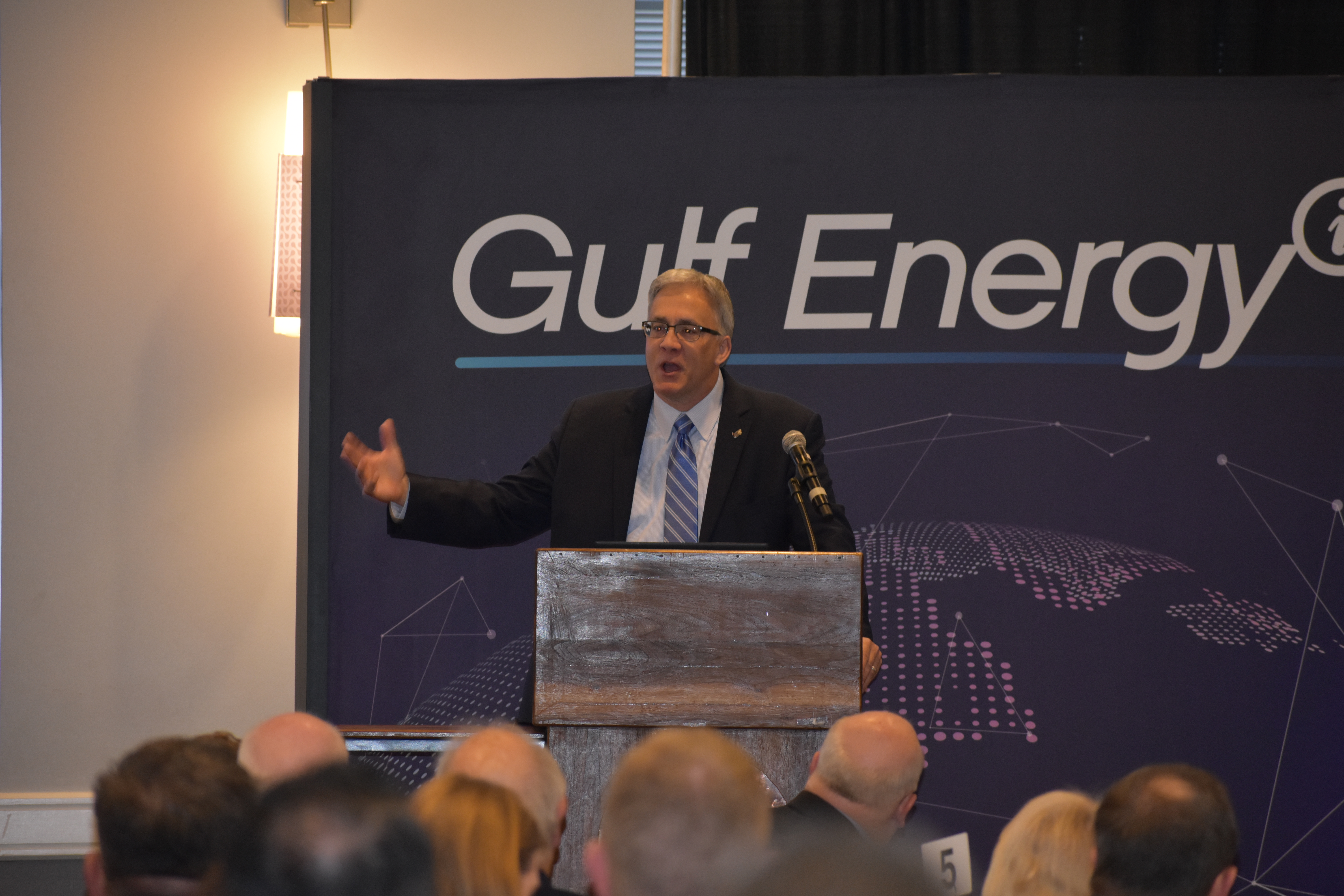
“One of the easiest forms of energy to access, no matter where you are on the planet, is crude oil,” Medlock said. “We know how to lift it, and it’s easy to move.”
Medlock argued that energy discussions are shifting from “transitions” to energy additions, noting that all forms of energy consumption continue to rise in developing economies. He added that policy discussions are increasingly recognizing the need to balance climate goals with affordability, security and economic growth.
From the oilfield perspective, Scott McKee, Senior V.P. of Marketing and Business Development at Patterson-UTI, highlighted how U.S. shale producers are delivering record output with fewer rigs and frac fleets.
“We’re doing more with less,” McKee said, pointing to gains in drilling efficiency, longer laterals and higher equipment utilization. “Rigs are drilling more footage per day, and frac fleets are pushing more production with fewer assets.”
McKee noted that while U.S. rig counts have declined since early 2023, production has continued to climb, underscoring the role of technology, automation and data analytics in sustaining output.
Texas Railroad Commissioner Wayne Christian stressed the critical role of independent producers in U.S. energy supply, warning that policy decisions often overlook their importance.
“Nationally, about 80% of oil and gas production and nearly 90% of exploration comes from independent producers,” Christian said. “They take the risk, and they drive discovery.”
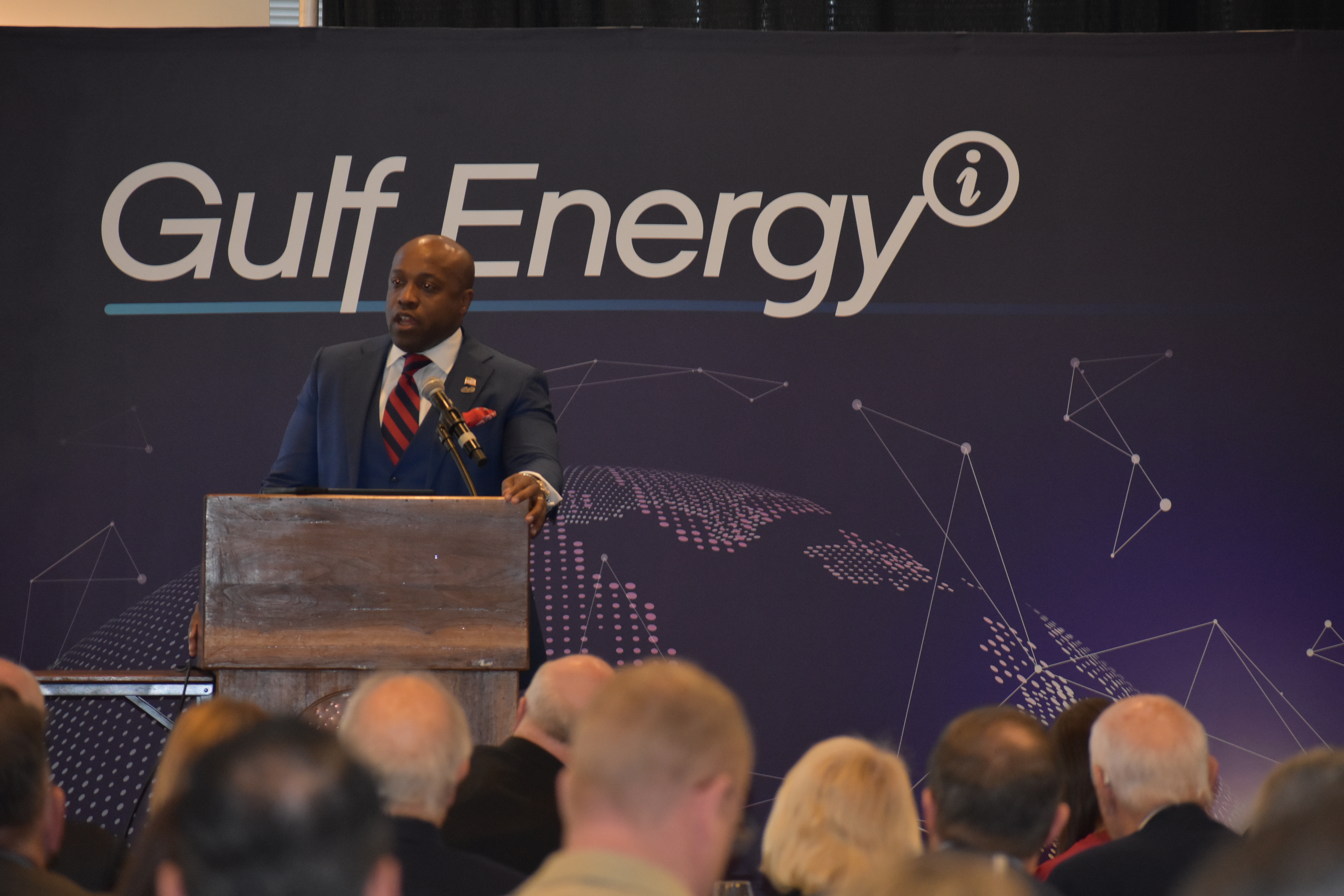
Christian also called for greater regulatory certainty to support long-term investment, while cautioning that prolonged low oil prices could ultimately curb supply growth.
Congressman Wesley Hunt framed domestic oil and gas production as a matter of national security and economic strength, urging continued deregulation and investment.
“Every single input in this world relies on what you do every day,” Hunt told attendees. “Why would we relinquish this power to other nations, when we can lead the world in affordable, abundant energy?”
Hunt argued that even aggressive electrification would only modestly reduce global oil demand, reinforcing the need for continued upstream development.
And for the program’s pinnacle, Kurt Abraham, editor-in-chief and chief forecaster at World Oil, presented the publication’s 2026 outlook, forecasting lower U.S. drilling activity amid price pressure and capital discipline, even as production remains near record levels.
World Oil expects U.S. drilling to decline about 4% in 2026, with Texas accounting for roughly 42–43% of total U.S. activity, while offshore development continues to favor large, sanctioned deepwater projects. International drilling is expected to outpace U.S. activity, led by Brazil, Guyana, West Africa and the Middle East.
“When all is said and done, technology continues to carry the day,” Abraham said, citing efficiency gains that allow operators to maintain output with fewer rigs and wells.
World Oil’s full 2026 Forecast will be published in its February issue.