What the U.S.–Venezuela oil reset means for Caribbean energy markets
Op-Ed: The United States’ first $500-million sale of Venezuelan crude marks a notable reset in hemispheric energy relations, signaling a renewed emphasis on pragmatism as Latin America and the Caribbean enter a critical investment phase.
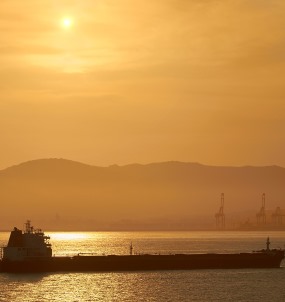
Completed under a new U.S.–Venezuela framework that allows sanctioned crude to be marketed with proceeds held in U.S.-controlled accounts, the transaction reflects a shift in how Washington is balancing political pressure with supply security. U.S. officials have indicated that additional cargoes could follow, offering Venezuela a constrained but tangible pathway back into global oil markets after years of isolation.
That isolation drove Venezuela’s oil output down sharply—from more than 3 MMbpd in the late 1990s to roughly 900,000 bpd in recent years. Even a partial reentry into export markets could have outsized regional effects.
For Latin America and the Caribbean, the implications extend well beyond Venezuela itself. Greater availability of Venezuelan heavy crude could help stabilize regional supply flows and improve refinery economics, particularly along the U.S. Gulf Coast, where heavy crude processing capacity remains significant. Caribbean refiners and energy importers could benefit from reduced reliance on longer-haul barrels from the Middle East or West Africa, lowering freight costs and improving supply reliability.
For island economies heavily dependent on imported fuels, even incremental improvements in logistics, pricing and supply predictability can translate into meaningful fiscal and energy-security gains. Over time, these shifts can support local employment, government revenues and more resilient power systems in markets that have historically paid a premium for energy imports.
The move also fits into Washington’s broader effort to reassert economic influence across Latin America amid intensifying global competition. President Donald Trump has publicly cited figures of up to $100 billion in potential U.S. investment in Latin American energy and infrastructure if engagement deepens. While more political signal than firm commitment, the message underscores how central energy has become to U.S. regional strategy.
Even a fraction of that capital, if realized, could accelerate upstream rehabilitation, midstream upgrades and downstream modernization across the hemisphere. Venezuela alone faces billions of dollars in deferred investment tied to aging fields, pipelines and export infrastructure.
Neighboring producers and service hubs also stand to gain from increased regional throughput and collaboration. Guyana and Suriname continue to attract multibillion-dollar upstream investment, while Trinidad and Tobago is reinforcing its role as a regional gas processing and LNG hub. A more active Venezuela could further integrate Caribbean energy flows rather than disrupt them.
The U.S. sale of Venezuelan oil may represent only a first step, but it is already a marker of change. For Latin America and the Caribbean, the question is no longer whether global attention is returning—but how effectively the region positions itself to convert shifting geopolitics into durable investment, infrastructure development and long-term energy resilience.
Map created in collaboration with Petroleum Economist and Global Energy Infrastructure. For an overview of this project and other related infrastructure developments, visit Global Energy Infrastructure. Copyright World Oil 2026. All rights reserved.
Distributed by APO Group on behalf of Energy Capital & Power.