CERAWeek 2026: AI and gas in the long term
(WO) - Natural gas was central last week to many of the ongoing discussions at CERAWeek 2026, hosted by S&P Global in Houston, Texas. With the rapid rise in data centers across the country, discussions about meeting the need for expanding rapid, reliable power generation have been at the forefront, with natural gas playing a key role.
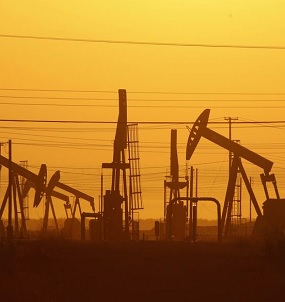
Natural gas holds the advantage. As oil prices and supply continues to fluctuate amid disruptions in the Middle East, natural gas has become an attractive choice for its comparatively stabler prices, compared to the traditional boom and bust cycle of oil. Even so, the rising demand for gas has only highlighted the current challenges of getting that needed gas to market and maintaining supply, as discussed in a panel on fulfilling the need for U.S. gas.
Executive VP and COO of Expand Energy, Josh Viets, was optimistic: “For what’s in the ground, I still think we have a super-abundance of molecules.” Even so, he was also quick to point out that “I think [regulation] ultimately becomes the bottleneck for providing the energy that the world needs.” The U.S. Energy Information Administration, among other organizations, has suggested that U.S. shale production is peaking, as the assets mature. Viets agreed, noting that with Tier One inventories, “we don’t see degradation in materials…we see degradation in returns.”
It takes more than the Permian. Even so, the future of gas remains open, according to Viet, who mentioned moving to new intervals as a strategy of continued gas production. “The Permian gas alone is not enough—I think you’re going to see basins like Haynesville play a huge role.” He also noted the importance of Woodford and Barnett intervals, which feature gassier reservoirs than their earlier interval counterparts. In addition, producers are looking for more steady sales in the form of long-term contracts, as fellow panelist, President and Partner of Aethon, Gordon Huddleston highlighted. Especially when it comes to AI-related buyers, he said, “you’re seeing a desire for some kind of long-term [gas] contracts.” Gas has developed a reputation for reliability, but operators remain cautious about maintaining production. “What does the government look like in ten years? What does the future landscape look like? There’s quite a large uncertainty band,” Huddleston pointed out.
Various factors. Data centers’ rapid expansion—and the high demand for energy they entail—is just one of those variability factors in the gas market. As discussed in another panel, natural gas needs major infrastructure reinforcement to fill demand for these centers, let alone regular domestic power demands. Senior V.P. for Electric Transmission at Dominion Energy Virginia, Joe Woomer, highlighted that “A lot of [the growth in demand] was masked by energy efficiency…[and] whether it was commercial or residential, it was masking a lot of the initial growth.” That offset to energy demand increase, in addition to fiscal discipline by energy producers, has led in part to what CCO of Invenergy Jim Shield called a kind of “chicken and egg” situation. “People aren’t building the plants without the demand there,” he said, noting the cautious approach of power generators in past decades preceding the recent data center boom. Global Head of Data Center Energy at Google, Amanda Corio, also added that the many energy efficiency advances “really did a lot in the last decade to absorb some of the upward growth that was still there, but [also] keeping the new additional capacity we needed relatively flat.”
Demand requires action. However, demand is spiking with data centers’ rapid expansion, and caution towards expanding capacity is no longer effective. “With AI, we saw a step change from [discussions of] hundreds of megawatts to discussions of gigawatts,” Corio pointed out. And as Co-Founder and CEO of Fermi America, Toby Neugebauer, outlined: “Ultimately, to provide power at the scale that a company like Google would need, it’s really only two sources: gas or nuclear.” However, both are facing similar challenges in bottlenecks and the latter, according to Corio, presents a lacking supply chain. “Even if we start building nuclear right now, it’s not going to show up for another 10 years, because we haven’t invested in the jobs, the supply chain and everything.”
Electrical grid vs. private “islands.” In the event that gas can overcome these challenges of supply bottlenecks, the other major challenge to powering data centers is the U.S. electrical grid itself. As it stands, there are two major approaches when it comes to answering the issue: either new islanded systems purpose-built to handle data center loads independently or major upgrades to the existing U.S. grid, so that it can handle the rapidly growing demands in addition to existing domestic load. Project Matador—proposed to be one of the largest private electrical grids in the U.S. as a collaboration including Fermi Energy and Google—aims to alleviate some of the strain, mostly through nuclear. Even so, the islands present drawbacks, as Corio was quick to stress: “When you’re building islands, you have to over-build the system…[and] that’s a lot of investment in gas or otherwise that is just used a few hours a year then sitting idle.”
Investment required. The wider U.S. grid also needs investment, per Corio: “You take all these data centers off the grid and now that…shared system of fixed costs, we are no longer paying for that.” In her view, meeting the data center energy demand goes beyond the current need and encompasses the next decade of what the U.S. grid system looks like. “We have built a beautifully complicated electricity system for ourselves, which means there is no one-size-fits-all solution. It’s always been a system and it’s all of the above.”
Above image: Siemens Energy