Brent crude tops $100 as Strait of Hormuz disruption rattles oil markets
(Bloomberg) — Brent crude settled above $100 a barrel for the first time since August 2022 as millions of barrels remain trapped in the Persian Gulf, leading to the biggest oil market disruption in history.
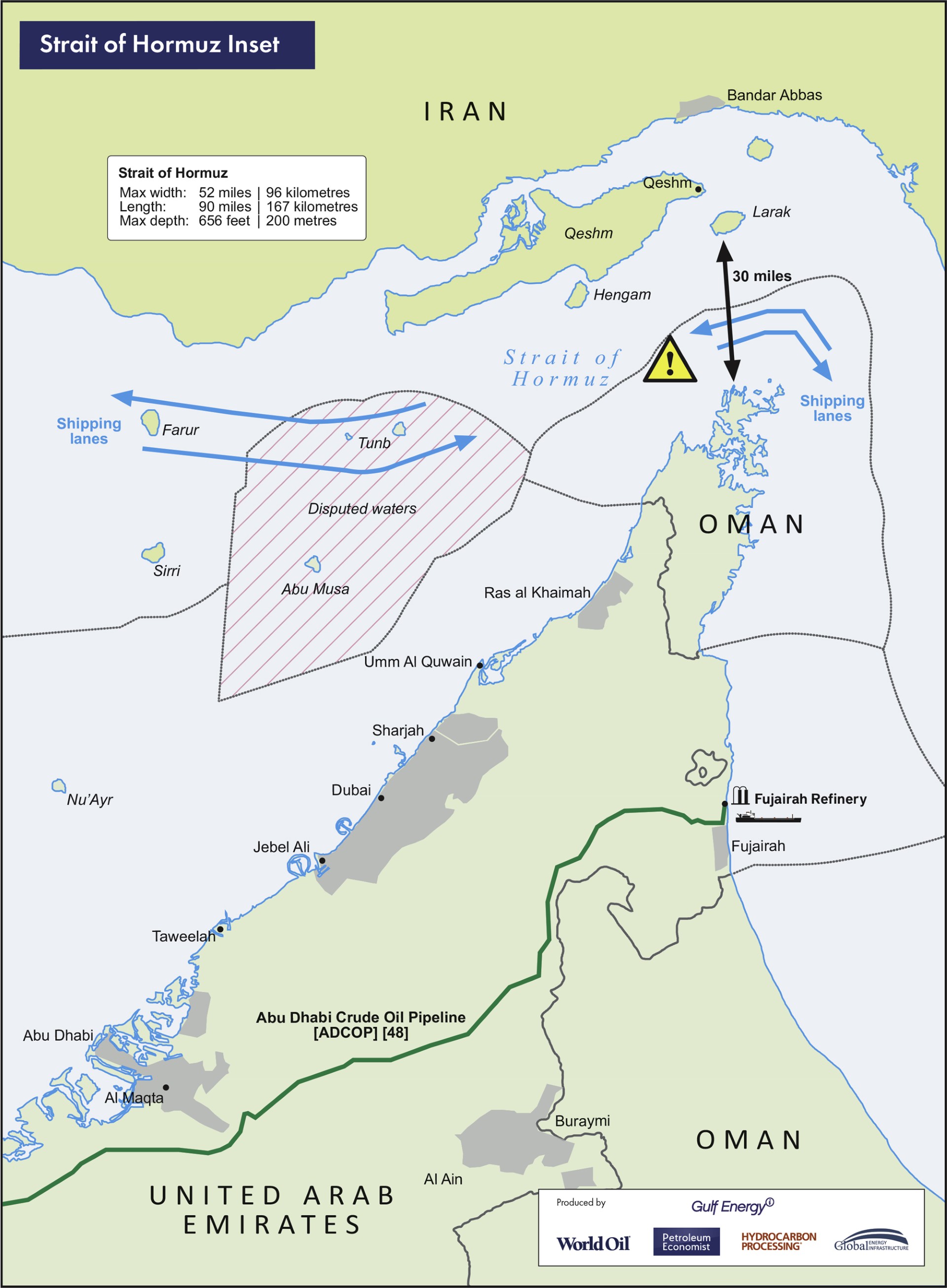
The global benchmark soared 9.2% on March 12 as multiple vessel attacks across the Arabian Gulf signaled a broadening of Iran’s campaign of maritime disruption beyond the vital Strait of Hormuz. West Texas Intermediate rose 9.7% to settle at $95.73, the highest in almost four years.
Brent’s ascent marks a psychological threshold at which oil market participants say political pressure to end the war and rein in soaring energy costs could intensify on U.S. President Donald Trump. Earlier, Trump posted on his Truth Social network that an Iran bereft of nuclear weapons is “of far greater interest and importance to me” than oil prices.
U.S. Treasury Secretary Scott Bessent, meanwhile, told Sky News that the U.S. Navy will be escorting vessels through the strait “as soon as it is militarily possible.”
Still, indicators of when flows through the strait might resume remain mixed. Prices eased during regular trading after Agence France-Presse reported that Iran said it allowed some ships to cross the critical waterway, and that it wasn’t laying mines. Before that, Iran’s new supreme leader said the thoroughfare should stay closed.
Prices trimmed gains on a Bloomberg News report that the Trump administration plans to issue temporary waivers for a maritime law requiring American-built ships be used to transport goods between domestic ports. The 30-day Jones Act waivers would allow foreign tankers to help supply refiners on the East Coast with fuel from the Gulf Coast and elsewhere in the US, in a bid to rein in surging oil prices.
“As with the emergency reserve release, easing the Jones Act is only a temporary fix,” said Carl Larry, an analyst at Enverus. The longer the disruption endures, “the less effect these actions will have on oil price.”
The International Energy Agency warned that the current supply disruption is the largest in the history of the global oil market. Wild price swings are also being exacerbated by financial flows from options markets to exchange-traded funds.
In further signs of strain, Chinese refiners have begun canceling agreed fuel-export cargoes, including gasoline and diesel. The country’s top processors were told last week to stop signing new contracts, and the latest directive is a step up from the earlier guidance.
Goldman Sachs Group Inc. warned that oil prices could exceed the 2008 peak if flows via Hormuz remain depressed through March, the bank said in a research note updating price forecasts. Brent rallied to a high of $147.50 a barrel that year on surging demand and stagnating supply.
The U.S. announced plans to release 172 million barrels as part of a coordinated move among some of the world’s largest economies to calm supply fears. Global crude consumption is slightly more than 100 million barrels a day and Persian Gulf producers have had to reduce roughly 6% of output thus far.
“There is no plug for a hole this large: supply risk premia continues to strengthen despite a historic SPR release,” said Dan Ghali, a commodity strategist at TD Securities. “CTAs won’t sell any crude above $65 a barrel, the scope for further quant-fund deleveraging is limited, and the shell-shock from this historic disruption is keeping discretionary money managers on the sidelines.”