Exxon leverages Guyana growth in global race for new oil resources
(Bloomberg) — ExxonMobil Corp. is betting the economic boom unleashed by its giant discovery in Guyana will give the company an edge when negotiating fiscal terms with other nations looking to develop their own oil and gas reserves.
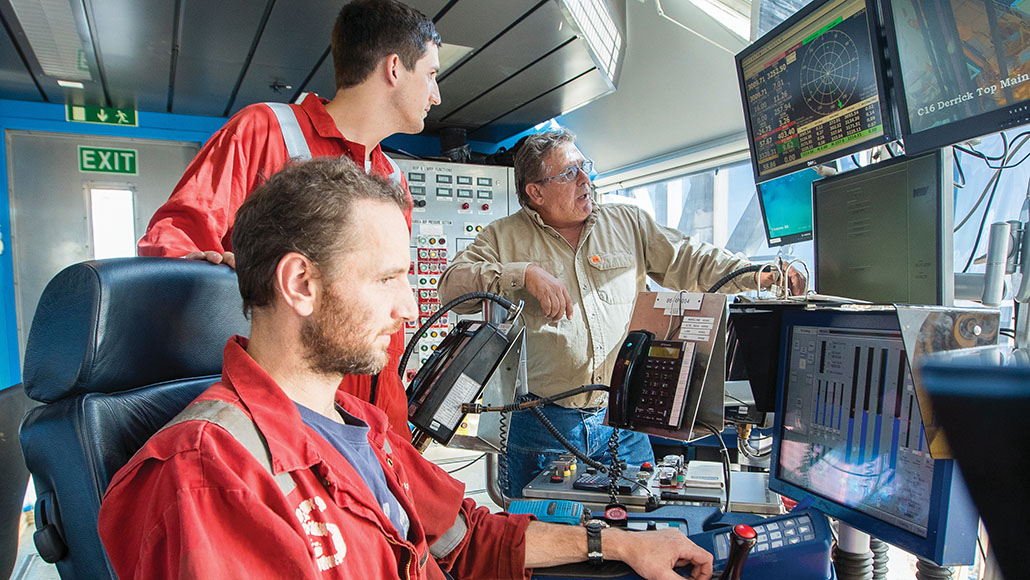
The U.S. supermajor says the breakneck production growth in the South American country shows Exxon can build oil projects faster and more efficiently than its competitors. It’s a “unique value proposition” that will ultimately make more money for countries — and Exxon, Chief Executive Officer Darren Woods said in an interview.
“We’re going to bring something unique to you that has great value to you, and then we expect to be compensated for that,” Woods said. “That’s the proposition that we’re making to basically all the resource owners and our customers.”
The world’s largest energy companies are locked in a global race to secure new resources as investor concerns shift from climate change to the longevity of their oil and gas reserves. Chevron Corp. is reviving exploration efforts while Shell Plc and BP Plc are pivoting back to fossil fuels after their ventures into lower-carbon energy fell flat. But Exxon believes its unwaivering faith in oil and gas combined with its ability to build complex projects on time and on budget is a competitive advantage.
“We can see that in Guyana,” Woods said. “In all the things where we’re executing, where we’re the operator, that we’re delivering differentiated results. Importantly, our industry peers can see it, and the resource owners can see it.”
Guyana produces nearly 1 million barrels a day — more than neighboring Venezuela — up from nothing just over six years ago. It has transformed the formerly impoverished South American country into one with a sovereign wealth fund worth $3 billion and growing. The boom is not without its problems — citizens worry about the government’s dependence on Exxon, inflation and potential environmental liabilities — but it has also created one of the fastest-growing economies in the world.
The changing face of the Caribbean nation was on full display at a Guyana energy conference this month, where the world’s top oil executives mingled in new hotels, restaurants and high-end retail outlets along the Atlantic shore front in Georgetown, the country’s capital. But trash-filled drainage ditches and a rising cost of living in a country where the public sector minimum wage is less than $500 a month are a reminder Guyana’s newfound wealth has yet to reach most of the population.
To this end, Exxon plans to invest $100 million in Guyana’s education system over the next decade to build up science, technology, engineering and math skills, especially among high-schoolers. The company plans to build science, technology, engineering and mathematics workshops in each of the country’s ten regions to provide after-school lessons for mostly low-income teenagers in an effort to prepare the future workforce.
Modeled on two centers in Houston, they will provide courses in computer-aided design, electronics and robotics while also helping with college applications. If successful, Exxon intends to build similar centers in other locations where it operates, including the Permian basin in West Texas and New Mexico.
The centers will address the skills and labor shortage currently one of the biggest impediments to Guyana’s future, President Irfaan Ali said in an interview. Many of the top jobs in the oil industry are held by workers contracted from overseas while immigrants from Venezuela and Cuba are increasingly taking lower-skill roles.
“We want an upskilled workforce to be ready for high-paying jobs, to have more knowledge transfer, technology transfer and skill transfer to the local workforce,” Ali said. “We want the capacity to be built in-country.”
It’s part of an effort to avoid the so-called resource curse, a tendency for oil-rich nations to become poorer, less stable and more corrupt due to the concentration of wealth among the powerful elite. Venezuela is a textbook case, while Nigeria, Equatorial Guinea and Chad — all countries Exxon has operated in the past — have all experienced some form of endemic corruption.
Woods rejects the idea that oil extraction causes corruption. “But it certainly can manifest itself because now you’ve got large sums of money floating around,” he said.
Ali’s government has quadrupled its annual budget since 2021 and this year plans to spend $7.5 billion on bridges, schools and hospitals as well as harnessing private investment to diversify the economy away from oil and gas.
Ali’s plan is showing early signs of progress. Guyana’s non-oil economy grew at 14.3% last year, slower than the 19.3% growth rate of the economy overall but still much faster than most of the rest of the world. And rising oil production, set to increase 30% to 1.3 million barrels a day over the next few years, means its sovereign wealth fund is likely to grow even if crude prices decline.
Exxon supports Ali in his efforts to rapidly grow living standards in a country where, just a few years ago, more than half the population lived in poverty, according to the Inter-American Development Bank.
“People in the community have to see the benefits of you being there,” Woods said. “To think you’re going to go into a community or location and be at odds with the people that you’re living and working with, that equation will never work.”
Since Trump took office a year ago, Exxon has expanded in Angola, obtained offshore drilling rights in Greece, won exploration concessions in Egypt and signed a production sharing contract in Trinidad and Tobago. The company has also held talks over new fields in Iraq and Libya, both OPEC members.
In these negotiations, Guyana looms large.
“If I can deliver more value for the same dollar, the benefit is huge for the resource owners,” Woods said. “It’s good for us, but it’s even better for the resource owners, and therefore they’re incentivized to bring the best in.”