Before OPEC, there was Texas: A better path for Venezuela’s oil revival
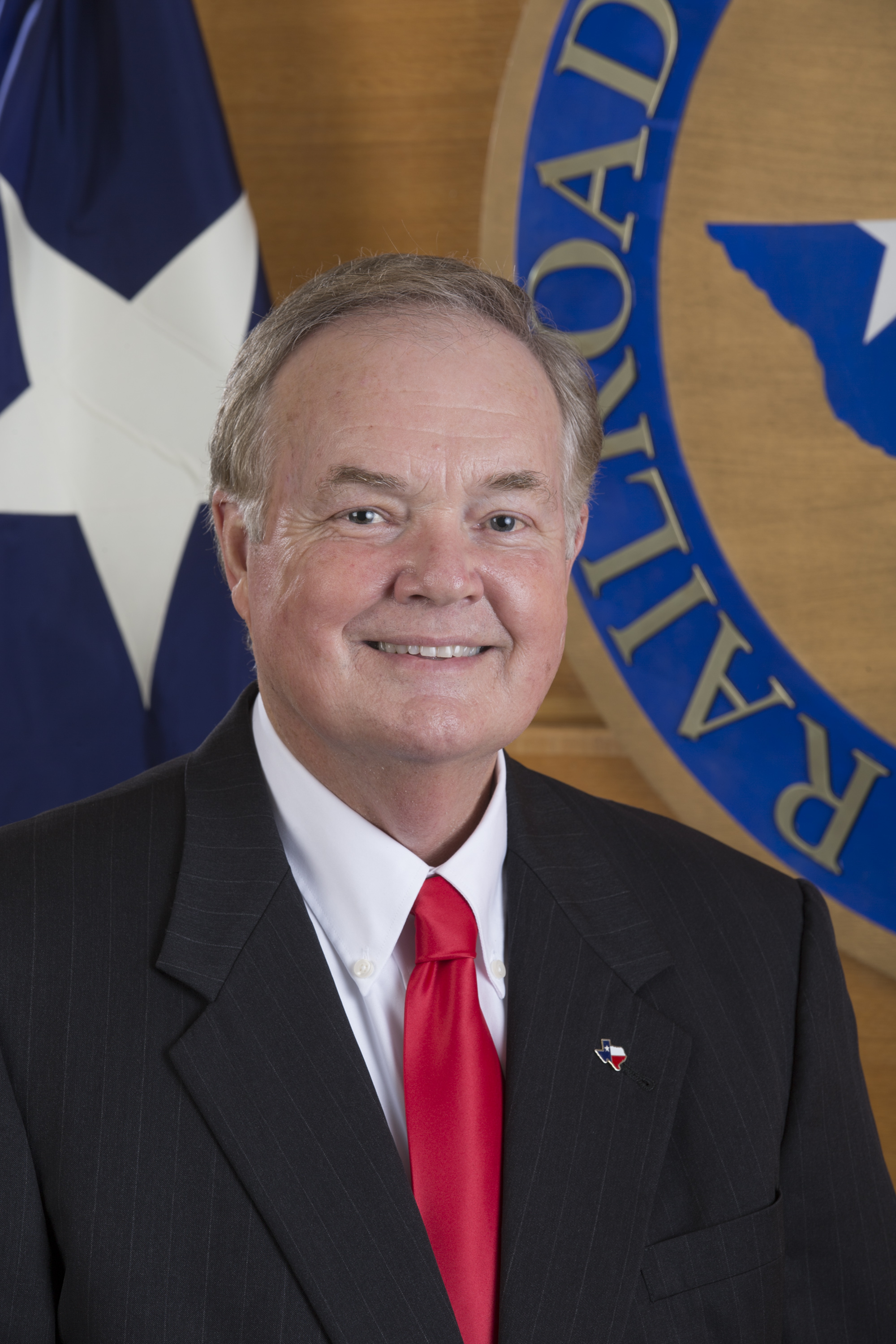
Op-Ed: For decades, global oil markets have been distorted by political cartels, centralized planning, and price manipulation masquerading as “stability.” Nowhere is that failure more obvious than Venezuela, a country sitting atop some of the largest oil reserves on Earth, yet crippled by corruption, mismanagement and ideology.
With Venezuela potentially reentering global energy markets, the question isn’t whether oil will flow again. The question is under what system. If the goal is long-term stability, transparency, and real investment, the answer isn’t OPEC, the answer is the Texas model.
THE TEXAS MODEL
Despite its outdated and misleading name, the Railroad Commission of Texas does not regulate railroads. It hasn’t for decades. Today, it is the world’s oldest and most experienced oil and gas regulator, overseeing drilling, production, pipelines, and environmental safety in the largest energy-producing state in America.
The name is an historical artifact. The expertise is very real.
Since 1917, long before most federal energy agencies even existed, the Railroad Commission has regulated Texas oil and gas production, using engineering, geology, data, and market principles. Under its watch, Texas has grown into the backbone of American energy security. Today, the state produces nearly half of all U.S. crude oil and leads the nation in natural gas production. If Texas were its own country, it would rank among the top oil producers on Earth.
That didn’t happen by accident.
For many Americans, OPEC feels inevitable, a permanent fixture of global energy markets. But it isn’t. OPEC was designed. And here’s a fact that few acknowledge: it was explicitly modeled after the Railroad Commission of Texas.
Long before OPEC existed, Texas faced a familiar problem: boom-and-bust cycles that wasted resources, destabilized markets, and harmed both producers and consumers. The Railroad Commission responded with disciplined, science-based regulation that balanced production, conserved resources, and stabilized markets. It worked so well that governments around the world tried to copy it.
The difference is that Texas stayed grounded in markets, while OPEC evolved into a political cartel, one driven by geopolitics, state-owned oil companies, and supply manipulation rather than transparency or efficiency. That distinction matters for Venezuela.
FIXING VENEZUELA
Venezuela’s problem has never been geology. The Orinoco Belt holds staggering reserves, potentially the largest in the world. The problem is trust. Investors remember expropriation. Workers remember insecurity. Companies remember permits that took years instead of days. Capital does not flow into chaos.
As energy analyst (and former World Oil Contributing Editor) David Blackmon has noted, rebuilding Venezuela’s oil sector requires a three-legged stool: credible investment terms, security for people and assets, and a regulatory system that actually functions. Remove any one of those legs, and the entire effort collapses.
This is where Texas can help; not by exporting ideology, but by exporting competence.
The Railroad Commission has spent more than a century proving that strong regulation and strong production are not opposites. They are partners. Permits are issued in days, not years. Environmental protection is grounded in science, not politics. Safety is enforced without strangling development. That balance is why investment flows to Texas while it flees less-stable jurisdictions.
Compare that with OPEC.
MOVING BEYOND OPEC’S FAILED MODEL
OPEC does not create market stability; it distorts price signals. Its decisions are shaped by internal power struggles and geopolitical leverage, not by supply and demand. It rewards scarcity, punishes innovation, and injects politics into markets that function best when left transparent and competitive.
Why would Venezuela rebuild its oil future on a model that failed it before?
There is a better alternative. West Texas Intermediate is already the most transparent oil benchmark in the world. It reflects real supply, real demand, and real market behavior, not ministerial decrees. A global pricing system anchored to WTI would attract capital, reward efficiency, and reduce the leverage of unstable or hostile regimes.
That idea isn’t radical. It’s practical.
The same regulatory framework that helped Texas move from wildcat chaos to global leadership can help Venezuela move from collapse to credibility. Not overnight. Not magically. But realistically.
No one is pretending the Texas model is a cure-all. Venezuela will still need rule of law, property rights, and political reform. But if the goal is to restart production safely, efficiently, and at scale, there is no regulator on Earth with more relevant experience than the Railroad Commission of Texas.
The world doesn’t need another OPEC. It needs more transparency, more competition, and markets that work.
Texas has spent more than a century proving that energy abundance and responsible regulation are not mutually exclusive. If Venezuela wants a future instead of a repeat of the past, it should stop looking to cartels, and start looking to Austin.
Wayne Christian has served as a member of the Railroad Commission of Texas since January 2017. Having been elected in November 2016 as the 50th Texas Railroad Commissioner, he is in the middle of his second six-year term. Since taking office, Commissioner Christian has been appointed by Governor Greg Abbott to the Interstate Oil and Gas Compact Commission (IOGCC) as the Official Representative of Texas. The IOGCC is one of the oldest and largest interstate compacts in the nation, formed over 80 years ago when several states joined together to resolve common issues in the industry without federal intervention. In 1987, after gaining valuable experience in business, banking and real estate, he opened a financial services business. He is a three-time AIG top advisor nationwide. In 1996, Commissioner Christian was elected to the Texas House of Representatives as the first Republican elected from deep East Texas since Reconstruction after the Civil War. He went on to serve seven terms before winning his first term at the RRC in 2016. Commissioner Christian earned a BBA degree in general business from Stephen F. Austin State University in 1973.
Map created in collaboration with Petroleum Economist and Global Energy Infrastructure. For an overview of this project and other related infrastructure developments, visit Global Energy Infrastructure. Copyright World Oil 2026. All rights reserved.