Shale oil growth in U.S. hurts Canadians as well as OPEC
ROBERT TUTTLE and DAN MURTAUGH
CALGARY and HOUSTON (Bloomberg) -- OPEC isn’t the only victim of the growth in U.S. shale oil.
A surge of light oil from North Dakota and Texas is cutting into the earnings of Canadians who turn heavy oil sands into a lighter crude that fetches more from refiners. Producers in Alberta, home of the country’s greatest reserves, upgraded 20% less of the region’s crude in October than four years earlier, according to the province’s energy regulator.
Two of five plants under construction were canceled and the province’s upgrading and refining capacity fell in 2013 for the first time in three decades. Companies are now sending record amounts of the heavy stuff on pipelines and trains to refineries in the U.S. Midwest and Gulf Coast.
|
|
|
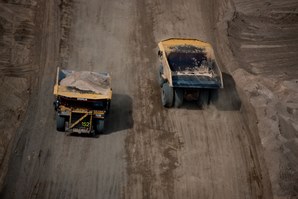
Aerial shot of Athabasca oil sands. Courtesy |
“Producers are not motivated to spend at least $10 billion building a facility to upgrade heavy oil into light oil, a product that is in oversupply,” said Jackie Forrest, V.P. of Calgary-based ARC Financial. “When producers sell heavy oil directly, a product that is in short supply, they get a better return.”
Light synthetic crude produced by upgraders has been worth just $10.75/bbl more then heavy crude in Alberta this month, down from about $25 in 2013, according to data compiled by Bloomberg. Projects including Suncor Energy' s Voyageur JV with France’s Total and Value Creation’s BA Energy Heartland were abandoned.
Global oil prices, down by more than 50% since June, will make upgrading projects even more challenging because the price difference between heavy and light crude is narrower, Forrest said. Prices plummeted as the U.S. pumped at the fastest pace in more than three decades and the Organization of Petroleum Exporting Countries resisted calls to cut production.
U.S. output has risen 70% in the past five years as producers used horizontal drilling and hydraulic fracturing to tap into previously inaccessible shale rock layers thousands of feet below the Earth’s surface. Most of the increase has been in light, sweet crude, similar quality Alberta upgraders get from processing heavy, thick oil sands.
Just 175,000 bpd of upgrading capacity is being built as oil sands production expands by 912,000 barrels, according to Alberta’s winter 2015 Oil Sands Industry Quarterly update.
Growing Exports
As less is processed at home, more Canadian crude flows south. Exports to the U.S. rose to a record 3.26 MMbopd the week ended Jan. 2, up more than 1 million since June 2010, U.S. Energy Information Administration data show.
The weak margins and lack of interest from companies hasn’t stopped Alberta’s provincial government from backing a group called the North West Redwater Partnership. Alberta has agreed to pay $26 billion over 30 years to process 37,500 bpd of bitumen, collected as royalties in kind from oil sands producers. The price works out to more than $63/bbl processed, more than twice the cost of the bitumen itself.
The project “came about mostly as a result of seeing a whole lot of upgrader projects canceled,” said Andrew Leach, professor at the University of Alberta’s school of business. “This isn’t economically viable.”
Government Response
Alberta’s government disagrees.
“Once completed, we expect this to be a good project for Alberta with strategic benefits that include adding value to our resources, creating highly skilled jobs and generating tax revenues,” said Derek Cummings, a spokesman for Alberta’s energy ministry. “Our expectation is that it will be profitable filling a niche market and providing badly needed diesel fuel.”
Ian MacGregor, chairman of North West Upgrading Inc., a shareholder in the project, didn’t return a phone call for comment.
Canadian crude output has grown by 52% in the past five years, making the country the world’s fifth largest producer, according to data from the country’s National Energy Board and BP. Much of that production is thick and high in sulfur, making it worth less than light, sweet crude.
Heavy Processing
Several refineries in Midwest states including Indiana and Illinois invested billions of dollars in recent years to be able to process the plentiful supply of cheaper heavy crude. At the same time Enbridge and TransCanada expanded pipelines to bring more heavy Canadian crude to the Gulf Coast.
A total of 288,000 bpd of Canadian crude was sent to the Gulf Coast in October, a figure set to increase to 400,000 bpd after Enbridge started operating two new pipelines last month, according to ARC Financial’s Forrest.
The rising flows south of Canadian crude are drawing a backlash in Alberta from labor groups, who say jobs, not just oil, are being exported. Alberta’s 4.6% unemployment rate, second lowest in Canada after Saskatchewan, may increase after oil’s 55% drop in six months prompted some producers to curtail future investment.
“Building upgraders in Alberta is seen by the industry as uneconomic,” said Dinara Millington, V.P. at the Canadian Energy Research Institute. “The U.S. refining market is being flooded with the light crude and they wouldn’t necessarily want our light stuff.”