Infinity dissolvable plug-and-perf system saves 50 hours by eliminating plug millout
Plug millouts pose challenges to completion operations
In wells with low reservoir pressure or long horizontal sections, plug millout can prove very challenging. Returns do not easily reach the surface, and fluid is often lost into the recently created fractures. Even with the use of nitrogen to assist with cleaning operations, debris from the removed plugs can accumulate in the horizontal section, posing a risk of getting the coiled tubing stuck during the operation. In addition to this significant risk, the economic impact of such operations increases under these conditions because operations tend to be lengthier and more complex than traditional plug millouts.
Watch video on how Infinity dissolvable plug-and-perf system works.
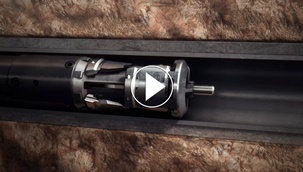
Infinity system eliminates poststimulation milling
A new plug-and-perf technology has been developed to address the problems mentioned above. The Infinity dissolvable plug-and-perf system relies on degradable technology to eliminate the need to millout plugs. During running in and setting, this new technology follows the same process as traditional plug and perf, but no plug removal is required after stimulation. Seat assemblies serve the function of plugs, and after all stages are completed, these seats remove themselves by simple contact with flowback water. Immediate production is possible and the well is left with a fullbore ID. No restrictions are left in the well that would prove problematic during any future workover intervention. This restriction-free environment also allows for the full production potential of the well to be achieved, as no chokes to production are left in the well.
Infinity system isolates zones without using plugs
While operating in the Bakken Formation in North Dakota, Zavanna investigated and tested several different dissolvable plug technologies to improve efficiency and eliminate poststimulation plug millout instead of using conventional plug-and-perf completion methods, which included milling out plugs with CT.
Schlumberger recommended the Infinity system, which uses degradable seats instead of plugs to temporarily isolate zones during multistage hydraulic fracturing stimulation. The new system was installed in two wells that were stimulated with a total of 100 stages and successfully placed on flowback. Tough well conditions resulted in a couple of stuck events during the operation, but they were simply resolved by injecting brine to dissolve the aluminum-based seat material.

After a few hours, the tool was free to move, and operations continued with no need for mechanical intervention. Once stimulation was completed, Zavanna performed a successful confirmation check to TD on the first well, validating that the degradation process had occurred as expected.
Zavanna saved 50 hours in operating time
After the success of the first well, Zavanna chose to eliminate poststimulation milling, saving 50 hours of operating time as well as the costs and risks associated with a CT run. The well was put straight onto production, and initial results showed that both of the wells stimulated using the Infinity system matched the productivity of offset wells but did so quicker, with fewer people at the wellsite, and with fewer interventions and their associated risks.